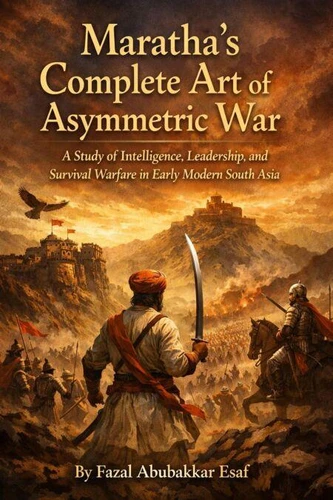
This book was not written to glorify war, nor to mythologize the past. It was written to understand survival. The Maratha state emerged under conditions of extreme asymmetry: inferior numbers, limited resources, hostile geography, and constant imperial pressure. Yet it endured, expanded, and repeatedly defeated forces that were superior in wealth, manpower, and prestige. This outcome cannot be explained through hero worship alone.
The central argument is that Maratha success was systemic. Intelligence, decentralization, psychological warfare, logistics, and leadership were not supporting elements; they were the core of the doctrine. Figures such as Maratha Sardar must therefore be understood not merely as battlefield commanders, but as operational architects functioning within an advanced strategic culture. This work treats Maratha warfare as a complete theory of asymmetric conflict, comparable in seriousness to Roman, Mongol, or modern insurgency studies.
It is intended for historians, military professionals, intelligence analysts, and leaders seeking to understand how smaller powers survive against empires.
This book was not written to glorify war, nor to mythologize the past. It was written to understand survival. The Maratha state emerged under conditions of extreme asymmetry: inferior numbers, limited resources, hostile geography, and constant imperial pressure. Yet it endured, expanded, and repeatedly defeated forces that were superior in wealth, manpower, and prestige. This outcome cannot be explained through hero worship alone.
The central argument is that Maratha success was systemic. Intelligence, decentralization, psychological warfare, logistics, and leadership were not supporting elements; they were the core of the doctrine. Figures such as Maratha Sardar must therefore be understood not merely as battlefield commanders, but as operational architects functioning within an advanced strategic culture. This work treats Maratha warfare as a complete theory of asymmetric conflict, comparable in seriousness to Roman, Mongol, or modern insurgency studies.
It is intended for historians, military professionals, intelligence analysts, and leaders seeking to understand how smaller powers survive against empires.


 , qui est-ce ?