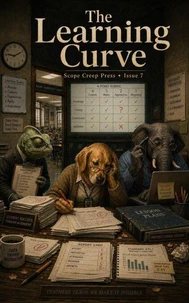
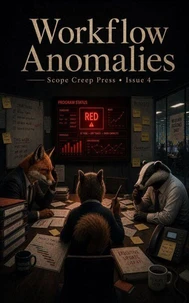
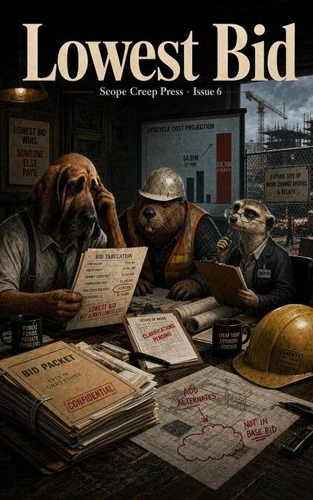
The cheapest bid is never actually cheap. Somebody always pays the difference, and it's usually not the bidder. Lowest Bid is the sixth issue of Scope Creep Press, an unconventional fiction magazine in book form. Three longer stories and three shorter pieces about construction and procurement under pressure at Metro Construction Authority. A bloodhound attends the bid opening and notices the winning number is low exactly where later change orders can hide.
He tests innocent explanations through addendum logs, subcontractor quotes, and copied insurance language. The contract is awarded anyway-his win is preserving the first record that will matter when the change orders arrive. A beaver site PM begins with a punch list but finds skipped anchors, substituted hardware, incomplete fire-seal checks, and a young laborer nearly hurt. The sign-off room applies pressure through reasonable people.
A meerkat procurement auditor maps sole-source exemption language, committee notes, consultant overlaps, and fundraiser dates until the vendor's luck has structure. Retaliation arrives socially before administratively: vanished invitations, long smiles, warnings about sensitive vendors. The shorter pieces are physical and immediate. A badger foreman receives two materials lists and one waiting crew, opens pallets, compares physical markings to procurement language, and finds the cheaper substitute is not equivalent where the work actually bears weight.
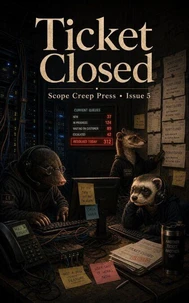
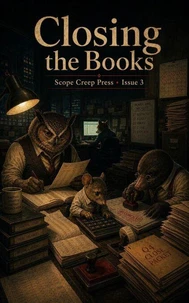
An owl architect catches a blueprint error during routine markup and has to reach the site before the line shift becomes concrete. A ferret follows a delivery signed for by a nonexistent employee through dock cameras, gate logs, and a frightened driver-the load is still nearby, being relabeled in pieces. One bidder's CFO is Peter Ackerman from Closing the Books. The building will be leased by DataFlow from Ticket Closed.
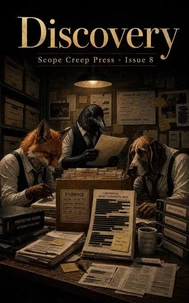
Nkem's audit connects to Tom Delaney's legal cases in Discovery. Created through a combination of human writing and generative AI, used for internal consistency across an interconnected multi-issue series.
The cheapest bid is never actually cheap. Somebody always pays the difference, and it's usually not the bidder. Lowest Bid is the sixth issue of Scope Creep Press, an unconventional fiction magazine in book form. Three longer stories and three shorter pieces about construction and procurement under pressure at Metro Construction Authority. A bloodhound attends the bid opening and notices the winning number is low exactly where later change orders can hide.
He tests innocent explanations through addendum logs, subcontractor quotes, and copied insurance language. The contract is awarded anyway-his win is preserving the first record that will matter when the change orders arrive. A beaver site PM begins with a punch list but finds skipped anchors, substituted hardware, incomplete fire-seal checks, and a young laborer nearly hurt. The sign-off room applies pressure through reasonable people.
A meerkat procurement auditor maps sole-source exemption language, committee notes, consultant overlaps, and fundraiser dates until the vendor's luck has structure. Retaliation arrives socially before administratively: vanished invitations, long smiles, warnings about sensitive vendors. The shorter pieces are physical and immediate. A badger foreman receives two materials lists and one waiting crew, opens pallets, compares physical markings to procurement language, and finds the cheaper substitute is not equivalent where the work actually bears weight.
An owl architect catches a blueprint error during routine markup and has to reach the site before the line shift becomes concrete. A ferret follows a delivery signed for by a nonexistent employee through dock cameras, gate logs, and a frightened driver-the load is still nearby, being relabeled in pieces. One bidder's CFO is Peter Ackerman from Closing the Books. The building will be leased by DataFlow from Ticket Closed.
Nkem's audit connects to Tom Delaney's legal cases in Discovery. Created through a combination of human writing and generative AI, used for internal consistency across an interconnected multi-issue series.

 , qui est-ce ?