A union organizer turned writer who fought for rights firsthand, combining self-help advocacy tools, business ethics on fair labor, and histories of worker uprisings across centuries.
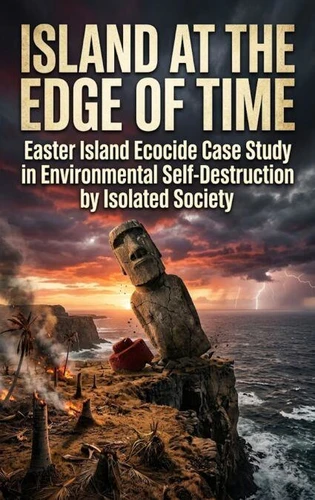
Island at the Edge of Time. Easter Island Ecocide Case Study in Environmental Self-Destruction by Isolated Society
Par :Formats :
Disponible dans votre compte client Decitre ou Furet du Nord dès validation de votre commande. Le format ePub est :
- Compatible avec une lecture sur My Vivlio (smartphone, tablette, ordinateur)
- Compatible avec une lecture sur liseuses Vivlio
- Pour les liseuses autres que Vivlio, vous devez utiliser le logiciel Adobe Digital Edition. Non compatible avec la lecture sur les liseuses Kindle, Remarkable et Sony
 , qui est-ce ?
Notre partenaire de plateforme de lecture numérique où vous retrouverez l'ensemble de vos ebooks gratuitement
Pour en savoir plus sur nos ebooks, consultez notre aide en ligne ici
C'est si simple ! Lisez votre ebook avec l'app Vivlio sur votre tablette, mobile ou ordinateur :

- Nombre de pages143
- FormatePub
- ISBN978-3-565-46200-1
- EAN9783565462001
- Date de parution27/05/2026
- Protection num.pas de protection
- Taille1 Mo
- Infos supplémentairesepub
- ÉditeurEmphaloz Publishing House
Résumé
This book probes how the story of Easter Island became a global parable of environmental self-destruction, weaving together archaeology, oral memory, and climate constraint to ask whether "ecocide" was self-wrought or a myth imposed from the outside. It follows the island as a microcosm of big-history questions: how fragile ecosystems, social competition over monumental symbols, and external contact reshape the fate of a small, isolated world.
First, it examines the traditional "ecocide" narrative-the image of Moai-driven deforestation, soil erosion, and population collapse-showing how wood scarcity, shifting subsistence, and the loss of long-distance voyaging reconfigured Rapa Nui life long before European contact.
Second, it traces how recent DNA, paleoecological, and agricultural studies have unsettled this picture, suggesting a more stable, adaptive population that managed severe limits through rock-garden agriculture and flexible social structures rather than reckless overexploitation. Third, it weighs the role of external forces-disease, slave-raiding, and colonial disruption-showing why the true "collapse" may lie more in post-contact rupture than in an earlier ecological suicide.
Second, it traces how recent DNA, paleoecological, and agricultural studies have unsettled this picture, suggesting a more stable, adaptive population that managed severe limits through rock-garden agriculture and flexible social structures rather than reckless overexploitation. Third, it weighs the role of external forces-disease, slave-raiding, and colonial disruption-showing why the true "collapse" may lie more in post-contact rupture than in an earlier ecological suicide.
A propos de Hollis Parr









24,99 €


9,99 €