SOLDES
Jusqu'à -70% sur une sélection d'articles*

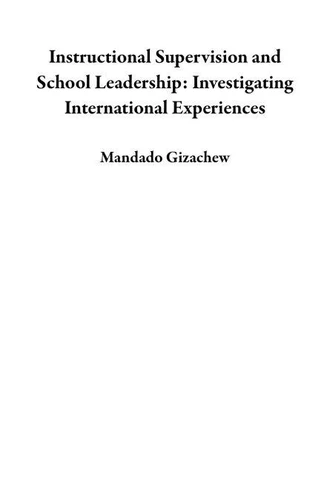
Instructional Supervision and School Leadership: Investigating International Experiences
Par :Formats :
Disponible dans votre compte client Decitre ou Furet du Nord dès validation de votre commande. Le format ePub est :
- Compatible avec une lecture sur My Vivlio (smartphone, tablette, ordinateur)
- Compatible avec une lecture sur liseuses Vivlio
- Pour les liseuses autres que Vivlio, vous devez utiliser le logiciel Adobe Digital Edition. Non compatible avec la lecture sur les liseuses Kindle, Remarkable et Sony
 , qui est-ce ?
Notre partenaire de plateforme de lecture numérique où vous retrouverez l'ensemble de vos ebooks gratuitement
Pour en savoir plus sur nos ebooks, consultez notre aide en ligne ici
C'est si simple ! Lisez votre ebook avec l'app Vivlio sur votre tablette, mobile ou ordinateur :

- FormatePub
- ISBN8235440029
- EAN9798235440029
- Date de parution26/04/2026
- Protection num.pas de protection
- Infos supplémentairesepub
- ÉditeurIoakim Ioakim
Résumé
Supervision, instructional supervision, educational supervision, and school leadership have undergone profound transformation globally over the past decade, shifting from bureaucratic, inspection-oriented paradigms toward collaborative, developmental, and learning-centered approaches. Contemporary supervision is conceptualized as a multidimensional process integrating guidance, monitoring, evaluation, mentoring, and professional support aimed at improving teaching quality and organizational effectiveness (Glickman et al., 2018; Zepeda, 2021).
Across primary and secondary education systems, supervision is no longer limited to compliance but is increasingly aligned with capacity building, reflective practice, and continuous improvement. Internationally, education systems emphasize supervision as a strategic lever for enhancing instructional quality, teacher competence, and student learning outcomes. This evolution reflects broader global reforms characterized by decentralization, accountability, and knowledge-based economies, where supervision and leadership are interdependent mechanisms driving school effectiveness and educational quality (OECD, 2019).
A central trend in global supervision practices is the integration of administrative, instructional, and supportive domains into a coherent framework. Administrative supervision ensures compliance with policies and standards, instructional supervision focuses on improving classroom practices, and supportive supervision addresses teachers' professional and emotional needs (Sergiovanni & Starratt, 2007; Zepeda, 2021).
These domains are no longer treated as discrete functions but are merged into holistic supervisory systems that balance accountability with professional growth. Instructional supervision, in particular, has gained prominence as the core mechanism for improving teaching and learning, emphasizing classroom observation, feedback, mentoring, and collaborative inquiry. Educational supervision operates across macro, meso, and micro levels, ensuring policy coherence, system accountability, and school-level improvement.
This integration reflects a systems-thinking approach, where supervision aligns institutional goals, teaching practices, and student outcomes within a unified quality assurance and development framework. Internationally, the conceptual shift from inspection to developmental supervision represents a defining trend. Historically rooted in control and compliance, supervision has evolved into a participatory and collaborative process that emphasizes professional learning and teacher empowerment (Sullivan & Glanz, 2013; Zepeda, 2021).
Modern supervisory practices incorporate coaching, mentoring, peer observation, and professional learning communities, fostering reflective practice and continuous improvement. This shift aligns with constructivist and adult learning theories, which position teachers as active agents in their professional development. Supervision is increasingly viewed as a relational process built on trust, communication, and shared responsibility between supervisors and teachers.
Consequently, the role of supervisors has transformed from authoritative inspectors to facilitators, instructional leaders, and change agents who support innovation and capacity building within schools.
Across primary and secondary education systems, supervision is no longer limited to compliance but is increasingly aligned with capacity building, reflective practice, and continuous improvement. Internationally, education systems emphasize supervision as a strategic lever for enhancing instructional quality, teacher competence, and student learning outcomes. This evolution reflects broader global reforms characterized by decentralization, accountability, and knowledge-based economies, where supervision and leadership are interdependent mechanisms driving school effectiveness and educational quality (OECD, 2019).
A central trend in global supervision practices is the integration of administrative, instructional, and supportive domains into a coherent framework. Administrative supervision ensures compliance with policies and standards, instructional supervision focuses on improving classroom practices, and supportive supervision addresses teachers' professional and emotional needs (Sergiovanni & Starratt, 2007; Zepeda, 2021).
These domains are no longer treated as discrete functions but are merged into holistic supervisory systems that balance accountability with professional growth. Instructional supervision, in particular, has gained prominence as the core mechanism for improving teaching and learning, emphasizing classroom observation, feedback, mentoring, and collaborative inquiry. Educational supervision operates across macro, meso, and micro levels, ensuring policy coherence, system accountability, and school-level improvement.
This integration reflects a systems-thinking approach, where supervision aligns institutional goals, teaching practices, and student outcomes within a unified quality assurance and development framework. Internationally, the conceptual shift from inspection to developmental supervision represents a defining trend. Historically rooted in control and compliance, supervision has evolved into a participatory and collaborative process that emphasizes professional learning and teacher empowerment (Sullivan & Glanz, 2013; Zepeda, 2021).
Modern supervisory practices incorporate coaching, mentoring, peer observation, and professional learning communities, fostering reflective practice and continuous improvement. This shift aligns with constructivist and adult learning theories, which position teachers as active agents in their professional development. Supervision is increasingly viewed as a relational process built on trust, communication, and shared responsibility between supervisors and teachers.
Consequently, the role of supervisors has transformed from authoritative inspectors to facilitators, instructional leaders, and change agents who support innovation and capacity building within schools.