Nouveauté
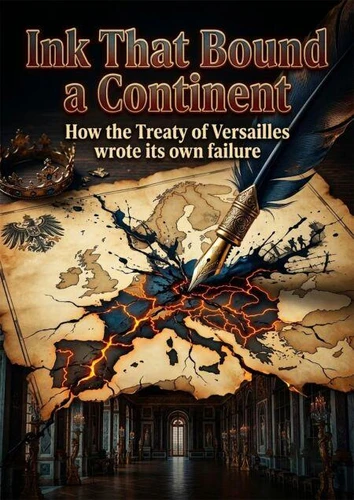
Ink That Bound a Continent. How the Treaty of Versailles wrote its own failure
Par :Formats :
Disponible dans votre compte client Decitre ou Furet du Nord dès validation de votre commande. Le format ePub est :
- Compatible avec une lecture sur My Vivlio (smartphone, tablette, ordinateur)
- Compatible avec une lecture sur liseuses Vivlio
- Pour les liseuses autres que Vivlio, vous devez utiliser le logiciel Adobe Digital Edition. Non compatible avec la lecture sur les liseuses Kindle, Remarkable et Sony
 , qui est-ce ?
Notre partenaire de plateforme de lecture numérique où vous retrouverez l'ensemble de vos ebooks gratuitement
Pour en savoir plus sur nos ebooks, consultez notre aide en ligne ici
C'est si simple ! Lisez votre ebook avec l'app Vivlio sur votre tablette, mobile ou ordinateur :

- Nombre de pages201
- FormatePub
- ISBN978-3-565-59247-0
- EAN9783565592470
- Date de parution27/07/2026
- Protection num.pas de protection
- Taille1 Mo
- Infos supplémentairesepub
- ÉditeurEmphaloz Publishing House
Résumé
The armistice had barely silenced the guns when diplomats in Paris began drafting the document that would define a generation. Between January and June 1919, they wrote clauses meant to prevent war forever, yet within twenty years those same clauses had become the rationale for a second global conflict. This book examines the Treaty of Versailles not as a single event but as a process of institutional design failure, where economic reparations, territorial redrawing, and the war guilt clause created a mechanical structure that could not absorb the political pressures it generated.
It traces how the treaty's architects, operating under time pressure and competing national interests, built a settlement that satisfied no one sufficiently and punished Germany in ways that made democratic governance nearly impossible. The narrative moves through the key negotiations, the domestic reactions across Europe, and the slow unraveling of enforcement mechanisms during the 1920s. What emerges is a portrait of a peace that was neither Carthaginian nor conciliatory, but fatally inconsistent.
The book closes by considering how the treaty's structural flaws became embedded in the institutional DNA of twentieth-century Europe, influencing everything from the League of Nations to postwar reconstruction after 1945. For readers seeking to understand why peace settlements fail, the Treaty of Versailles remains the most instructive case in modern history.
It traces how the treaty's architects, operating under time pressure and competing national interests, built a settlement that satisfied no one sufficiently and punished Germany in ways that made democratic governance nearly impossible. The narrative moves through the key negotiations, the domestic reactions across Europe, and the slow unraveling of enforcement mechanisms during the 1920s. What emerges is a portrait of a peace that was neither Carthaginian nor conciliatory, but fatally inconsistent.
The book closes by considering how the treaty's structural flaws became embedded in the institutional DNA of twentieth-century Europe, influencing everything from the League of Nations to postwar reconstruction after 1945. For readers seeking to understand why peace settlements fail, the Treaty of Versailles remains the most instructive case in modern history.