Nouveauté
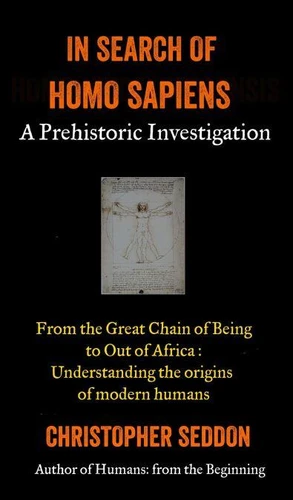
In Search of Homo Sapiens. In Search of, #9
Par :Formats :
Disponible dans votre compte client Decitre ou Furet du Nord dès validation de votre commande. Le format ePub est :
- Compatible avec une lecture sur My Vivlio (smartphone, tablette, ordinateur)
- Compatible avec une lecture sur liseuses Vivlio
- Pour les liseuses autres que Vivlio, vous devez utiliser le logiciel Adobe Digital Edition. Non compatible avec la lecture sur les liseuses Kindle, Remarkable et Sony
 , qui est-ce ?
Notre partenaire de plateforme de lecture numérique où vous retrouverez l'ensemble de vos ebooks gratuitement
Pour en savoir plus sur nos ebooks, consultez notre aide en ligne ici
C'est si simple ! Lisez votre ebook avec l'app Vivlio sur votre tablette, mobile ou ordinateur :

- FormatePub
- ISBN978-1-7392519-0-1
- EAN9781739251901
- Date de parution28/05/2026
- Protection num.pas de protection
- Infos supplémentairesepub
- ÉditeurChristopher Seddon
Résumé
From the Great Chain of Being to Out of Africa : Understanding the origins of modern humansHow do we as humans view ourselves? We have a scientific name for ourselves: Homo sapiens. It means (some would say ironically) 'wise man'. The term Homo sapiens was originated by the Swedish biologist Linnaeus, who believed that he was arranging what God had created. He was nonetheless criticised for suggesting that humans be ranked with mere animals.
We still tend to think we are very different to anything else living on the planet Earth, even if we now recognise that we are indeed part of the animal kingdom. Evolutionary biologists, supported by genetic evidence, tell us that humans (Homo sapiens) are closely related to African apes, as Darwin suggested in the nineteenth century. Since the publication of Huxley's Evidence as to Man's place in Nature and Darwin's The Descent of Man a century and a half ago, we have learned that we were not even the first human species, but comparative newcomers.
In the last forty years, theories have come and gone as to our origins. Only now, helped by accurately dated fossils and more powerful genetic techniques, are palaeoanthropologists beginning to learn the real picture. This is the eighth eBook Short Read of the In Search of series.*** This and the other 11 short reads in the In Search of series are available in a single collection: Prehistoric Investigations 2: In search of ***
We still tend to think we are very different to anything else living on the planet Earth, even if we now recognise that we are indeed part of the animal kingdom. Evolutionary biologists, supported by genetic evidence, tell us that humans (Homo sapiens) are closely related to African apes, as Darwin suggested in the nineteenth century. Since the publication of Huxley's Evidence as to Man's place in Nature and Darwin's The Descent of Man a century and a half ago, we have learned that we were not even the first human species, but comparative newcomers.
In the last forty years, theories have come and gone as to our origins. Only now, helped by accurately dated fossils and more powerful genetic techniques, are palaeoanthropologists beginning to learn the real picture. This is the eighth eBook Short Read of the In Search of series.*** This and the other 11 short reads in the In Search of series are available in a single collection: Prehistoric Investigations 2: In search of ***