Naomi Clarke is an English-language nonfiction author who writes about personal development, emotional intelligence, and modern life challenges. Her books combine practical insights with reflective storytelling, encouraging readers to build resilience, confidence, and a deeper understanding of themselves and others. Her writing style is calm, uplifting, and accessible, with a focus on clarity, balance, and meaningful personal growth.
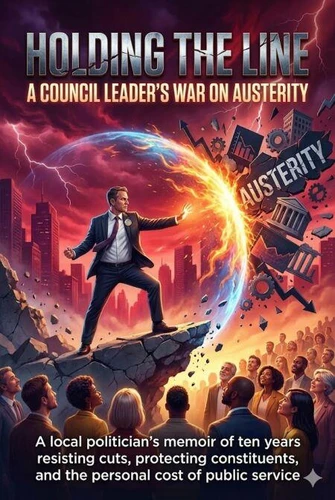
Holding the Line: A Council Leader's War on Austerity. A local politician's memoir of ten years resisting cuts, protecting constituents, and the personal cost of public service
Par :Formats :
Disponible dans votre compte client Decitre ou Furet du Nord dès validation de votre commande. Le format ePub est :
- Compatible avec une lecture sur My Vivlio (smartphone, tablette, ordinateur)
- Compatible avec une lecture sur liseuses Vivlio
- Pour les liseuses autres que Vivlio, vous devez utiliser le logiciel Adobe Digital Edition. Non compatible avec la lecture sur les liseuses Kindle, Remarkable et Sony
 , qui est-ce ?
Notre partenaire de plateforme de lecture numérique où vous retrouverez l'ensemble de vos ebooks gratuitement
Pour en savoir plus sur nos ebooks, consultez notre aide en ligne ici
C'est si simple ! Lisez votre ebook avec l'app Vivlio sur votre tablette, mobile ou ordinateur :

- Nombre de pages222
- FormatePub
- ISBN978-3-565-13440-3
- EAN9783565134403
- Date de parution18/12/2025
- Protection num.pas de protection
- Taille347 Ko
- Infos supplémentairesepub
- ÉditeurEmphaloz Publishing House
Résumé
For a decade, she watched central government bleed her council dry. Year after year, the budget arrived with impossible cuts-libraries closing, social workers laid off, children's centres shuttered, elderly care reduced to crisis-only intervention. As council leader, she had a choice: implement the cuts or refuse and watch the government impose them anyway. She chose a third option: fight.
This is the unflinching memoir of a British local politician who spent ten years as a human shield between austerity policy and the people it was designed to hurt.
Through detailed accounts of council meetings, tense negotiations with Whitehall bureaucrats, and desperate campaigns to save local services, she exposes how austerity wasn't about "efficiency"-it was ideological demolition of the welfare state, outsourced to local authorities who took the blame. But this narrative reveals the hidden casualties of political combat: the exhaustion of constant crisis management, the psychological toll of being hated by constituents for cuts she didn't create, the moral injury of choosing which vulnerable people to protect when you cannot save everyone.
She documents colleagues breaking down, marriages collapsing under strain, and the peculiar isolation of being a "powerful" council leader who is actually powerless against central government diktat. Through her journey, readers witness the mechanics of institutional resistance: using reserves as political weapons, creative accounting that borders on illegality, building community coalitions that transcend party lines, and the ultimate realization that holding the line means eventually being overrun.
For local government workers, political activists, citizens concerned about public services, and anyone questioning whether individual politicians can stand against systemic cruelty, this memoir offers both devastating honesty and a testament to the dignity of fighting even when you know you'll lose.
Through detailed accounts of council meetings, tense negotiations with Whitehall bureaucrats, and desperate campaigns to save local services, she exposes how austerity wasn't about "efficiency"-it was ideological demolition of the welfare state, outsourced to local authorities who took the blame. But this narrative reveals the hidden casualties of political combat: the exhaustion of constant crisis management, the psychological toll of being hated by constituents for cuts she didn't create, the moral injury of choosing which vulnerable people to protect when you cannot save everyone.
She documents colleagues breaking down, marriages collapsing under strain, and the peculiar isolation of being a "powerful" council leader who is actually powerless against central government diktat. Through her journey, readers witness the mechanics of institutional resistance: using reserves as political weapons, creative accounting that borders on illegality, building community coalitions that transcend party lines, and the ultimate realization that holding the line means eventually being overrun.
For local government workers, political activists, citizens concerned about public services, and anyone questioning whether individual politicians can stand against systemic cruelty, this memoir offers both devastating honesty and a testament to the dignity of fighting even when you know you'll lose.