Naomi Clarke is an English-language nonfiction author who writes about personal development, emotional intelligence, and modern life challenges. Her books combine practical insights with reflective storytelling, encouraging readers to build resilience, confidence, and a deeper understanding of themselves and others. Her writing style is calm, uplifting, and accessible, with a focus on clarity, balance, and meaningful personal growth.
Nouveauté
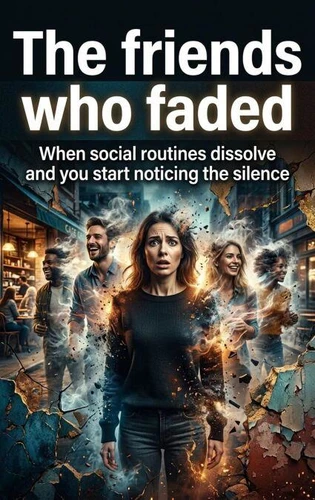
The friends who faded. When social routines dissolve and you start noticing the silence
Par :Formats :
Disponible dans votre compte client Decitre ou Furet du Nord dès validation de votre commande. Le format ePub est :
- Compatible avec une lecture sur My Vivlio (smartphone, tablette, ordinateur)
- Compatible avec une lecture sur liseuses Vivlio
- Pour les liseuses autres que Vivlio, vous devez utiliser le logiciel Adobe Digital Edition. Non compatible avec la lecture sur les liseuses Kindle, Remarkable et Sony
 , qui est-ce ?
Notre partenaire de plateforme de lecture numérique où vous retrouverez l'ensemble de vos ebooks gratuitement
Pour en savoir plus sur nos ebooks, consultez notre aide en ligne ici
C'est si simple ! Lisez votre ebook avec l'app Vivlio sur votre tablette, mobile ou ordinateur :

- Nombre de pages145
- FormatePub
- ISBN978-3-565-54517-9
- EAN9783565545179
- Date de parution08/07/2026
- Protection num.pas de protection
- Taille699 Ko
- Infos supplémentairesepub
- ÉditeurEmphaloz Publishing House
Résumé
You used to have a crowd. Now you check your phone and find nothing. Not because something went wrong, but because life quietly eroded the space for connection. The friends who faded didn't disappear in a fight. They disappeared in the gap between busy schedules and unreturned texts.
This book sits with that ache without rushing to fix it. It acknowledges that social health isn't measured by contact count, but by the weight of silence after a bad day.
When the person you would have called now feels like a stranger. When the group chat goes quiet. When you realize you've stopped inviting people because the rejection feels worse than solitude. The exploration moves through what gets lost: the ease of shared history, the comfort of being known without explanation, the simple relief of someone asking how you are and meaning it. It also examines what gets gained: the clarity of knowing who matters, the permission to release friendships that became obligations, the slow rebuilding of connection on honest terms. Mapping social health means looking at what you have, not what you're supposed to have.
It means accepting that some seasons of life are quieter, and that quiet isn't failure. It's invitation. Without promises of transformation, this book offers a mirror. For those who sense something missing, and want to understand what.
When the person you would have called now feels like a stranger. When the group chat goes quiet. When you realize you've stopped inviting people because the rejection feels worse than solitude. The exploration moves through what gets lost: the ease of shared history, the comfort of being known without explanation, the simple relief of someone asking how you are and meaning it. It also examines what gets gained: the clarity of knowing who matters, the permission to release friendships that became obligations, the slow rebuilding of connection on honest terms. Mapping social health means looking at what you have, not what you're supposed to have.
It means accepting that some seasons of life are quieter, and that quiet isn't failure. It's invitation. Without promises of transformation, this book offers a mirror. For those who sense something missing, and want to understand what.