
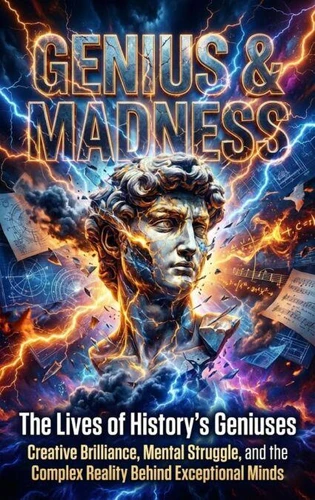
Genius & Madness: The Lives of History's Geniuses. Creative Brilliance, Mental Struggle, and the Complex Reality Behind Exceptional Minds
Par :Formats :
Disponible dans votre compte client Decitre ou Furet du Nord dès validation de votre commande. Le format ePub est :
- Compatible avec une lecture sur My Vivlio (smartphone, tablette, ordinateur)
- Compatible avec une lecture sur liseuses Vivlio
- Pour les liseuses autres que Vivlio, vous devez utiliser le logiciel Adobe Digital Edition. Non compatible avec la lecture sur les liseuses Kindle, Remarkable et Sony
 , qui est-ce ?
Notre partenaire de plateforme de lecture numérique où vous retrouverez l'ensemble de vos ebooks gratuitement
Pour en savoir plus sur nos ebooks, consultez notre aide en ligne ici
C'est si simple ! Lisez votre ebook avec l'app Vivlio sur votre tablette, mobile ou ordinateur :

- Nombre de pages196
- FormatePub
- ISBN978-3-565-24975-6
- EAN9783565249756
- Date de parution15/02/2026
- Protection num.pas de protection
- Taille2 Mo
- Infos supplémentairesepub
- ÉditeurEmphaloz Publishing House
Résumé
Exceptional intellectual and creative achievement has often coexisted with psychological distress, but the relationship between genius and mental illness is more complex than romantic narratives suggest. This comprehensive examination explores how historical figures of extraordinary accomplishment-scientists, artists, composers, writers, and mathematicians-navigated mental health challenges while producing transformative work, analyzing both the biographical evidence and the cultural myths surrounding creative genius.
Drawing on personal correspondence, medical records, biographical accounts, and psychological research, this book reveals how individuals managed depression, anxiety, bipolar disorder, and other conditions within their historical contexts.
It explores how mental distress sometimes influenced creative work, how social isolation enabled or hindered productivity, and how contemporary understanding of mental illness shaped how genius was perceived and treated. The narrative examines support systems that enabled continued work, the role of institutions in helping or harming exceptional individuals, and how economic security affected outcomes. Each profile analyzes the specific nature of their achievements, the documented evidence of mental health struggles, and how later generations romanticized or stigmatized their conditions.
It addresses the myth that suffering produces genius, the reality that many struggled despite their talents rather than because of them, and how better mental health support might have extended productive lives. This work provides rigorous analysis grounded in historical evidence rather than mythology about tortured genius.
It explores how mental distress sometimes influenced creative work, how social isolation enabled or hindered productivity, and how contemporary understanding of mental illness shaped how genius was perceived and treated. The narrative examines support systems that enabled continued work, the role of institutions in helping or harming exceptional individuals, and how economic security affected outcomes. Each profile analyzes the specific nature of their achievements, the documented evidence of mental health struggles, and how later generations romanticized or stigmatized their conditions.
It addresses the myth that suffering produces genius, the reality that many struggled despite their talents rather than because of them, and how better mental health support might have extended productive lives. This work provides rigorous analysis grounded in historical evidence rather than mythology about tortured genius.
A propos de Sarah Whitfield















8,99 €