
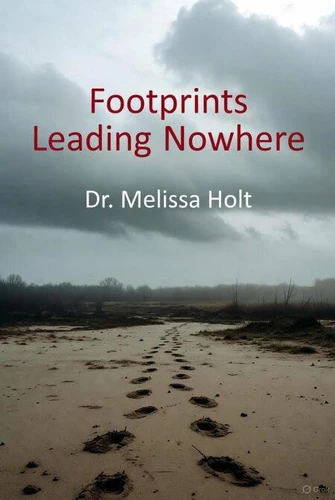
Footprints Leading Nowhere
Par :Formats :
Disponible dans votre compte client Decitre ou Furet du Nord dès validation de votre commande. Le format ePub est :
- Compatible avec une lecture sur My Vivlio (smartphone, tablette, ordinateur)
- Compatible avec une lecture sur liseuses Vivlio
- Pour les liseuses autres que Vivlio, vous devez utiliser le logiciel Adobe Digital Edition. Non compatible avec la lecture sur les liseuses Kindle, Remarkable et Sony
 , qui est-ce ?
Notre partenaire de plateforme de lecture numérique où vous retrouverez l'ensemble de vos ebooks gratuitement
Pour en savoir plus sur nos ebooks, consultez notre aide en ligne ici
C'est si simple ! Lisez votre ebook avec l'app Vivlio sur votre tablette, mobile ou ordinateur :

- FormatePub
- ISBN8232382773
- EAN9798232382773
- Date de parution13/11/2025
- Protection num.pas de protection
- Infos supplémentairesepub
- ÉditeurDraft2Digital
Résumé
Between the winter of 1997 and the spring of 2004, at least 47 people (and possibly more than 70) walked onto the beaches of Cape Hatteras National Seashore, Ocracoke Island, Portsmouth Island, and Core Banks, removed their shoes, and disappeared. No bodies ever recovered. No suicide notes. No signs of struggle. Only neat rows of footprints that marched into the surf and ended, as if the ocean had erased the final step.
What began as isolated local legend became the largest missing-persons cluster in modern American history with zero physical evidence. The National Park Service sealed records. The Coast Guard classified search logs. Families were told their loved ones had "most likely drowned, " despite calm seas and perfect weather on many of the disappearance dates. Dr. Melissa Holt, then a young behavioral geographer specializing in liminal spaces and disappearance patterns, was granted limited access in 2009 after a Freedom of Information Act lawsuit.
What she uncovered (and what tried to silence her) forms the backbone of this book: a phenomenon that defies physics, psychology, and recorded history, yet left behind hundreds of Polaroids, audio cassettes, sand samples that refuse to age, and one terrifying constant: every victim was barefoot when they vanished. This is not a ghost story. This is what happens when a place decides it no longer wants to give its visitors back.
What began as isolated local legend became the largest missing-persons cluster in modern American history with zero physical evidence. The National Park Service sealed records. The Coast Guard classified search logs. Families were told their loved ones had "most likely drowned, " despite calm seas and perfect weather on many of the disappearance dates. Dr. Melissa Holt, then a young behavioral geographer specializing in liminal spaces and disappearance patterns, was granted limited access in 2009 after a Freedom of Information Act lawsuit.
What she uncovered (and what tried to silence her) forms the backbone of this book: a phenomenon that defies physics, psychology, and recorded history, yet left behind hundreds of Polaroids, audio cassettes, sand samples that refuse to age, and one terrifying constant: every victim was barefoot when they vanished. This is not a ghost story. This is what happens when a place decides it no longer wants to give its visitors back.
A propos de Melissa Holt


5,49 €

To Seduce A Storm. 1, #1
E-book
5,99 €

Dust, Wind, And Faith
E-book
10,49 €

8,99 €

Sun Bleached Bones
E-book
13,99 €

The Third Key
E-book
9,49 €

5,99 €
5,49 €

The Seven Minute Window
E-book
9,49 €



11,49 €
5,49 €



Ruby Jean Rose
E-book
4,49 €

21,99 €