SOLDES
Jusqu'à -70% sur une sélection d'articles*

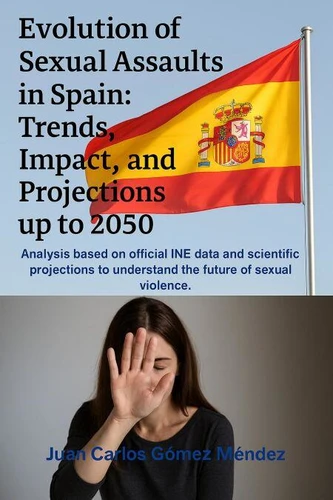
Evolution of Sexual Assaults in Spain: Trends, Impact and Projections to 2050.. Research published in English, #3
Par :Formats :
Disponible dans votre compte client Decitre ou Furet du Nord dès validation de votre commande. Le format ePub est :
- Compatible avec une lecture sur My Vivlio (smartphone, tablette, ordinateur)
- Compatible avec une lecture sur liseuses Vivlio
- Pour les liseuses autres que Vivlio, vous devez utiliser le logiciel Adobe Digital Edition. Non compatible avec la lecture sur les liseuses Kindle, Remarkable et Sony
 , qui est-ce ?
Notre partenaire de plateforme de lecture numérique où vous retrouverez l'ensemble de vos ebooks gratuitement
Pour en savoir plus sur nos ebooks, consultez notre aide en ligne ici
C'est si simple ! Lisez votre ebook avec l'app Vivlio sur votre tablette, mobile ou ordinateur :

- FormatePub
- ISBN8227106742
- EAN9798227106742
- Date de parution15/08/2024
- Protection num.pas de protection
- Infos supplémentairesepub
- ÉditeurBig Dog Books, LLC
Résumé
This study analyzes the evolution of sexual assaults in Spain following the enactment of Organic Law 10/2022, which unified all non-consensual acts under the concept of sexual assault. Between 2022 and 2025, cases increased from 31 to 130 (a rise of 319%). Male participation is practically absolute, while cases committed by women are marginal (0-2 cases). The methodology applied was quantitative, correlational, and non-experimental, with a cross-sectional design.
The following techniques were used:Descriptive analysis to characterize the evolution by sex and year. Shapiro-Wilk normality test to assess data distribution. Correlations to determine relationships between variables (r = 1.00 between totals and men). Linear regression models to project trends up to 2050, including confidence intervals. The results project that, if the trend continues, by 2050 approximately 436 cases could occur (lower limit: 392; upper limit: 479), highlighting an alarming growth and the urgent need for public policies.
The following techniques were used:Descriptive analysis to characterize the evolution by sex and year. Shapiro-Wilk normality test to assess data distribution. Correlations to determine relationships between variables (r = 1.00 between totals and men). Linear regression models to project trends up to 2050, including confidence intervals. The results project that, if the trend continues, by 2050 approximately 436 cases could occur (lower limit: 392; upper limit: 479), highlighting an alarming growth and the urgent need for public policies.