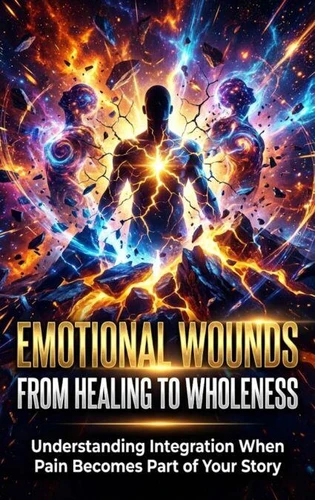
Emotional Wounds: From Healing to Wholeness. Understanding Integration When Pain Becomes Part of Your Story
Par :Formats :
Disponible dans votre compte client Decitre ou Furet du Nord dès validation de votre commande. Le format ePub est :
- Compatible avec une lecture sur My Vivlio (smartphone, tablette, ordinateur)
- Compatible avec une lecture sur liseuses Vivlio
- Pour les liseuses autres que Vivlio, vous devez utiliser le logiciel Adobe Digital Edition. Non compatible avec la lecture sur les liseuses Kindle, Remarkable et Sony
 , qui est-ce ?
Notre partenaire de plateforme de lecture numérique où vous retrouverez l'ensemble de vos ebooks gratuitement
Pour en savoir plus sur nos ebooks, consultez notre aide en ligne ici
C'est si simple ! Lisez votre ebook avec l'app Vivlio sur votre tablette, mobile ou ordinateur :

- Nombre de pages156
- FormatePub
- ISBN978-3-565-23390-8
- EAN9783565233908
- Date de parution10/02/2026
- Protection num.pas de protection
- Taille2 Mo
- Infos supplémentairesepub
- ÉditeurEmphaloz Publishing House
Résumé
Healing isn't about erasing pain-it's about integration. This book explores the psychological patterns of emotional wounds, examining how unprocessed hurt shapes our responses, relationships, and sense of safety in the world. Through understanding why certain wounds remain sensitive years later, how our nervous system holds trauma in the body, and what happens when we mistake numbing for healing, this work offers insight into the difference between suppressing pain and genuinely integrating it.
Rather than prescribing a linear healing journey or promising complete recovery, it invites readers to explore how emotional wounds become part of their story without defining their entire identity, how wholeness includes rather than excludes difficult experiences, and why healing requires tolerating discomfort rather than avoiding it. For anyone carrying old hurts that still influence present reactions, or who feels stuck between acknowledging pain and moving forward, this book reframes healing as an ongoing process of making room for all parts of experience.
Rather than prescribing a linear healing journey or promising complete recovery, it invites readers to explore how emotional wounds become part of their story without defining their entire identity, how wholeness includes rather than excludes difficult experiences, and why healing requires tolerating discomfort rather than avoiding it. For anyone carrying old hurts that still influence present reactions, or who feels stuck between acknowledging pain and moving forward, this book reframes healing as an ongoing process of making room for all parts of experience.