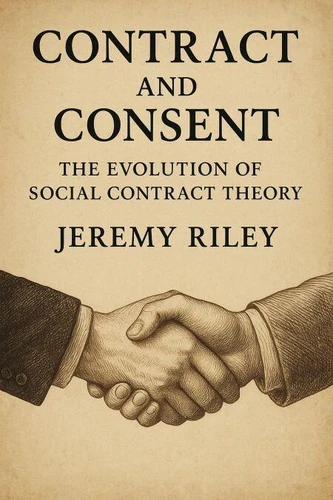
Contract and Consent: The Evolution of Social Contract Theory
Par :Formats :
Disponible dans votre compte client Decitre ou Furet du Nord dès validation de votre commande. Le format ePub est :
- Compatible avec une lecture sur My Vivlio (smartphone, tablette, ordinateur)
- Compatible avec une lecture sur liseuses Vivlio
- Pour les liseuses autres que Vivlio, vous devez utiliser le logiciel Adobe Digital Edition. Non compatible avec la lecture sur les liseuses Kindle, Remarkable et Sony
 , qui est-ce ?
Notre partenaire de plateforme de lecture numérique où vous retrouverez l'ensemble de vos ebooks gratuitement
Pour en savoir plus sur nos ebooks, consultez notre aide en ligne ici
C'est si simple ! Lisez votre ebook avec l'app Vivlio sur votre tablette, mobile ou ordinateur :

- FormatePub
- ISBN8230727095
- EAN9798230727095
- Date de parution20/04/2025
- Protection num.pas de protection
- Infos supplémentairesepub
- ÉditeurIndependently Published
Résumé
Contract and Consent: The Evolution of Social Contract Theory by Jeremy Riley explores the development of social contract theory from its origins in the works of early political philosophers to its modern-day implications. The book delves into the seminal contributions of thinkers such as Hobbes, Locke, Rousseau, Kant, and Marx, examining how their ideas about the state, individual rights, and the nature of authority have shaped political philosophy and governance.
The narrative traces the evolution of the social contract, a foundational concept in political thought, and its role in shaping the relationship between the individual and the state. It begins with Hobbes' bleak view of human nature and his justification for absolute sovereignty, followed by Locke's more optimistic vision of government as a protector of natural rights. Rousseau introduces the concept of the general will, challenging traditional notions of political authority, while Kant elevates moral law and individual autonomy as central to the legitimacy of the state.
The book then examines the critiques of liberalism, from Marxist and anarchist perspectives that reject the state's legitimacy altogether, to the rise of neo-liberalism in the late 20th century, which argues for a minimal state focused on individual liberty and free markets. Through these theoretical evolutions, Contract and Consent provides a critical lens on the balance between individual freedom, equality, justice, and political authority.
Drawing on historical context, key philosophical debates, and the evolution of political thought, this book offers an insightful exploration of the social contract's centrality to understanding the modern political landscape and its continued relevance in addressing contemporary issues of governance, justice, and rights.
The narrative traces the evolution of the social contract, a foundational concept in political thought, and its role in shaping the relationship between the individual and the state. It begins with Hobbes' bleak view of human nature and his justification for absolute sovereignty, followed by Locke's more optimistic vision of government as a protector of natural rights. Rousseau introduces the concept of the general will, challenging traditional notions of political authority, while Kant elevates moral law and individual autonomy as central to the legitimacy of the state.
The book then examines the critiques of liberalism, from Marxist and anarchist perspectives that reject the state's legitimacy altogether, to the rise of neo-liberalism in the late 20th century, which argues for a minimal state focused on individual liberty and free markets. Through these theoretical evolutions, Contract and Consent provides a critical lens on the balance between individual freedom, equality, justice, and political authority.
Drawing on historical context, key philosophical debates, and the evolution of political thought, this book offers an insightful exploration of the social contract's centrality to understanding the modern political landscape and its continued relevance in addressing contemporary issues of governance, justice, and rights.
A propos de Jeremy Riley



2,99 €