The end of the world has never gone out of fashion-it has simply been rebranded. From the prophetic scrolls of ancient Mesopotamia to the algorithmic echo chambers of the twenty-first century, the core architecture of collapse mythology has remained strikingly consistent: a corrupted present, an imminent reckoning, and the promise of a cleansed world beyond the ruins. Old Apocalypse, New Brandings traces this long continuity, revealing how ancient fears are repeatedly dressed in the language of each new era.
This book examines how millenarian traditions from early Christian eschatology, Islamic fitna narratives, and pre-Columbian cyclical cosmologies were absorbed, stripped of context, and redeployed by modern political movements, wellness cultures, and digital communities.
It shows how the vocabulary shifts-from divine judgment to global reset, from plague to systemic collapse-while the underlying emotional grammar remains unchanged.
Grounded in archaeology, intellectual history, and media analysis, this is a serious and accessible account of humanity's most persistent obsession-and a timely reminder that understanding where these narratives come from is the first step toward reading them clearly.
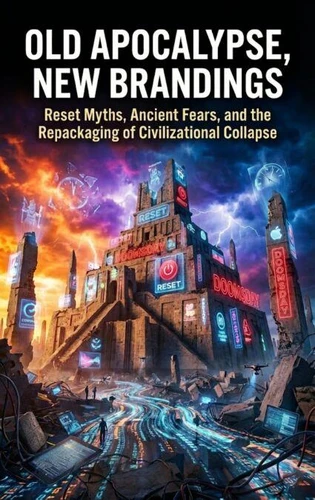
The end of the world has never gone out of fashion-it has simply been rebranded. From the prophetic scrolls of ancient Mesopotamia to the algorithmic echo chambers of the twenty-first century, the core architecture of collapse mythology has remained strikingly consistent: a corrupted present, an imminent reckoning, and the promise of a cleansed world beyond the ruins. Old Apocalypse, New Brandings traces this long continuity, revealing how ancient fears are repeatedly dressed in the language of each new era.
This book examines how millenarian traditions from early Christian eschatology, Islamic fitna narratives, and pre-Columbian cyclical cosmologies were absorbed, stripped of context, and redeployed by modern political movements, wellness cultures, and digital communities.
It shows how the vocabulary shifts-from divine judgment to global reset, from plague to systemic collapse-while the underlying emotional grammar remains unchanged.
Grounded in archaeology, intellectual history, and media analysis, this is a serious and accessible account of humanity's most persistent obsession-and a timely reminder that understanding where these narratives come from is the first step toward reading them clearly.


 , qui est-ce ?