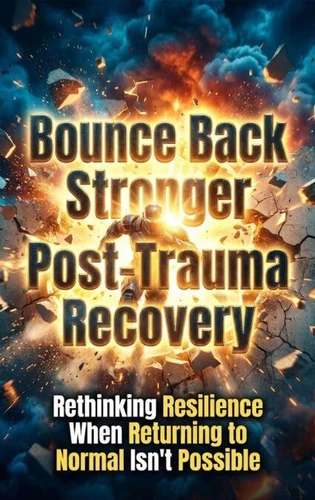
Bounce Back Stronger: Post-Trauma Recovery. Rethinking Resilience When Returning to Normal Isn't Possible
Par :Formats :
Disponible dans votre compte client Decitre ou Furet du Nord dès validation de votre commande. Le format ePub est :
- Compatible avec une lecture sur My Vivlio (smartphone, tablette, ordinateur)
- Compatible avec une lecture sur liseuses Vivlio
- Pour les liseuses autres que Vivlio, vous devez utiliser le logiciel Adobe Digital Edition. Non compatible avec la lecture sur les liseuses Kindle, Remarkable et Sony
 , qui est-ce ?
Notre partenaire de plateforme de lecture numérique où vous retrouverez l'ensemble de vos ebooks gratuitement
Pour en savoir plus sur nos ebooks, consultez notre aide en ligne ici
C'est si simple ! Lisez votre ebook avec l'app Vivlio sur votre tablette, mobile ou ordinateur :

- Nombre de pages183
- FormatePub
- ISBN978-3-565-23402-8
- EAN9783565234028
- Date de parution10/02/2026
- Protection num.pas de protection
- Taille2 Mo
- Infos supplémentairesepub
- ÉditeurEmphaloz Publishing House
Résumé
Resilience isn't about bouncing back-it's about integrating what changed you. This book explores the psychological patterns after significant difficulty, examining how trauma reshapes our nervous system, why returning to who we were before feels impossible, and what happens when resilience narratives deny the permanence of impact. Through understanding how our bodies hold traumatic experience, why growth and loss coexist after hardship, and how meaning-making differs from toxic positivity, this work offers insight into post-traumatic adaptation.
Rather than prescribing recovery timelines or celebrating strength, it invites readers to explore what resilience looks like when you've been fundamentally altered, how to honor both survival and grief, and why pressure to be stronger can invalidate legitimate struggle. For anyone navigating life after significant trauma, or who feels alienated by conventional resilience messaging, this book examines the reality of living with experiences that don't resolve neatly into growth stories.
Rather than prescribing recovery timelines or celebrating strength, it invites readers to explore what resilience looks like when you've been fundamentally altered, how to honor both survival and grief, and why pressure to be stronger can invalidate legitimate struggle. For anyone navigating life after significant trauma, or who feels alienated by conventional resilience messaging, this book examines the reality of living with experiences that don't resolve neatly into growth stories.
A propos de Alina Frost









8,99 €