Nouveauté
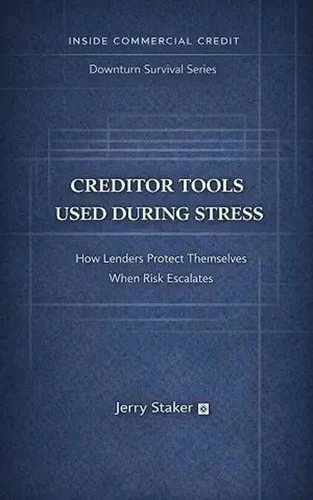
Book #7 – Creditor Tools Used During Stress: How Lenders Protect Themselves When Risk Escalates. Inside Commercial Credit - Downturn Survival, #7
Par :Formats :
Disponible dans votre compte client Decitre ou Furet du Nord dès validation de votre commande. Le format ePub est :
- Compatible avec une lecture sur My Vivlio (smartphone, tablette, ordinateur)
- Compatible avec une lecture sur liseuses Vivlio
- Pour les liseuses autres que Vivlio, vous devez utiliser le logiciel Adobe Digital Edition. Non compatible avec la lecture sur les liseuses Kindle, Remarkable et Sony
 , qui est-ce ?
Notre partenaire de plateforme de lecture numérique où vous retrouverez l'ensemble de vos ebooks gratuitement
Pour en savoir plus sur nos ebooks, consultez notre aide en ligne ici
C'est si simple ! Lisez votre ebook avec l'app Vivlio sur votre tablette, mobile ou ordinateur :

- FormatePub
- ISBN8235818446
- EAN9798235818446
- Date de parution25/07/2026
- Protection num.pas de protection
- Infos supplémentairesepub
- ÉditeurIoakim Ioakim
Résumé
When financial stress appears, lenders rarely act all at once. They apply tools. These tools are not punishments, and they are not signs of hostility. They are mechanisms designed to protect repayment, preserve collateral, satisfy regulators, and manage capital exposure as risk escalates. Borrowers often misinterpret these actions as personal, arbitrary, or adversarial - when in reality, they are procedural responses to narrowing margin for error.
Creditor Tools Used During Stress explains the specific instruments lenders deploy as risk rises, why those tools appear when they do, and how borrowers misread their purpose. This book is not about foreclosure. It is about control without default. It represents the operational phase of the series - where classification (Book #6) translates into visible lender behavior through structured tools applied under tightening conditions.
Drawing on decades of commercial lending, credit administration, and workout experience, Jerry Staker walks readers through the monitoring, protection, and anticipation tools lenders use long before formal enforcement begins. He explains why inspections increase, reporting intensifies, collateral values are re-tested, and repayment expectations tighten - even when payments are still current. Inside this book, you will learn: · How annual loan reviews change during downturns· Why inspections and field visits increase under stress· How collateral revaluation pressures reshape negotiations· Why refinance readiness becomes a gating issue· How resizing and forced paydowns protect lender capital· What liquidity sweeps and setoff rights really signal· Why enhanced reporting is imposed - and how it's used· How lenders exert control without foreclosing· The most common borrower misreads of creditor actions· How to anticipate the next move instead of reacting to it· How to stay one step ahead while options still existThis volume connects the series progression: perception (Book #2), structure (Book #3), numbers (Book #4), signals (Book #5), classification (Book #6) - now expressed as action.
This is how systems behave when discretion is narrowing and risk must be controlled. This book is written for small business owners, commercial borrowers, guarantors, and stakeholders (even commercial lenders!) who want to understand lender behavior before it feels threatening - and respond strategically instead of emotionally. Lenders do not escalate tools because they want control. They escalate tools because they fear losing it.
Borrowers who understand those tools early can still shape outcomes. Those who don't discover that control was exercised quietly, long before it was visible.
Creditor Tools Used During Stress explains the specific instruments lenders deploy as risk rises, why those tools appear when they do, and how borrowers misread their purpose. This book is not about foreclosure. It is about control without default. It represents the operational phase of the series - where classification (Book #6) translates into visible lender behavior through structured tools applied under tightening conditions.
Drawing on decades of commercial lending, credit administration, and workout experience, Jerry Staker walks readers through the monitoring, protection, and anticipation tools lenders use long before formal enforcement begins. He explains why inspections increase, reporting intensifies, collateral values are re-tested, and repayment expectations tighten - even when payments are still current. Inside this book, you will learn: · How annual loan reviews change during downturns· Why inspections and field visits increase under stress· How collateral revaluation pressures reshape negotiations· Why refinance readiness becomes a gating issue· How resizing and forced paydowns protect lender capital· What liquidity sweeps and setoff rights really signal· Why enhanced reporting is imposed - and how it's used· How lenders exert control without foreclosing· The most common borrower misreads of creditor actions· How to anticipate the next move instead of reacting to it· How to stay one step ahead while options still existThis volume connects the series progression: perception (Book #2), structure (Book #3), numbers (Book #4), signals (Book #5), classification (Book #6) - now expressed as action.
This is how systems behave when discretion is narrowing and risk must be controlled. This book is written for small business owners, commercial borrowers, guarantors, and stakeholders (even commercial lenders!) who want to understand lender behavior before it feels threatening - and respond strategically instead of emotionally. Lenders do not escalate tools because they want control. They escalate tools because they fear losing it.
Borrowers who understand those tools early can still shape outcomes. Those who don't discover that control was exercised quietly, long before it was visible.