Nouveauté
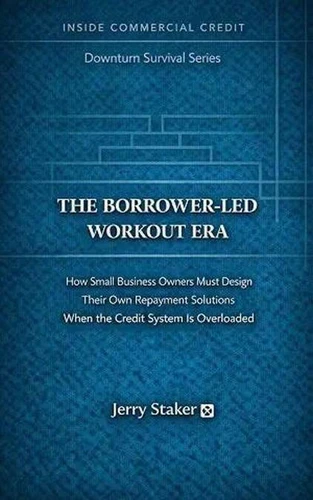
Book #13 – The Borrower-Led Workout Era: How Small Business Owners Must Design Their Own Repayment Solutions When the Credit System Is Overloaded. Inside Commercial Credit - Downturn Survival, #13
Par :Formats :
Disponible dans votre compte client Decitre ou Furet du Nord dès validation de votre commande. Le format ePub est :
- Compatible avec une lecture sur My Vivlio (smartphone, tablette, ordinateur)
- Compatible avec une lecture sur liseuses Vivlio
- Pour les liseuses autres que Vivlio, vous devez utiliser le logiciel Adobe Digital Edition. Non compatible avec la lecture sur les liseuses Kindle, Remarkable et Sony
 , qui est-ce ?
Notre partenaire de plateforme de lecture numérique où vous retrouverez l'ensemble de vos ebooks gratuitement
Pour en savoir plus sur nos ebooks, consultez notre aide en ligne ici
C'est si simple ! Lisez votre ebook avec l'app Vivlio sur votre tablette, mobile ou ordinateur :

- FormatePub
- ISBN8235834675
- EAN9798235834675
- Date de parution27/07/2026
- Protection num.pas de protection
- Infos supplémentairesepub
- ÉditeurIoakim Ioakim
Résumé
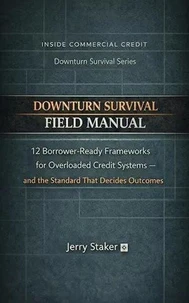
When economic stress becomes systemic, credit does not fail because lenders are unwilling to help. It fails because the system no longer has the capacity to do so one borrower at a time. The Borrower-Led Workout Era explains why traditional, relationship-led restructurings collapse during major downturns - and why small business owners must now design their own repayment solutions if they want to survive inside an overloaded credit system.
Written from an institutional credit and risk-management perspective, this book reveals how lenders actually behave when volume overwhelms discretion: how triage silently replaces judgment, how silence becomes categorization, and how borrowers who wait for guidance lose control of outcomes long before default occurs. This is not a negotiation manual. It is a survival guide for constrained systems.
It expands the series from individual loan dynamics to system-wide behavior - showing what happens when credit capacity itself becomes the limiting factor, not just individual borrower performance. Readers will learn why: · Credit breakdowns begin with capacity bottlenecks, not hostility· Relationship banking cannot scale under systemic stress· "Good borrower" narratives lose decision-making power· Full-repayment promises destroy credibility when unsupported by mat· Reasonableness - not optimism - becomes the only defensible standardThe book then shows borrowers how to respond: by authoring lender-ready workout frameworks that can survive internal scrutiny by credit committees, risk officers, auditors, and regulators - when the borrower is not in the room.
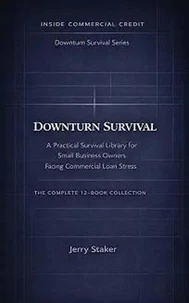
It also confronts realities most books avoid: shared loss, structural impairment, and when an orderly exit preserves more value than denial. This book does not promise rescue. It explains how outcomes are actually shaped - and how prepared borrowers remain participants instead of being processed. This volume ties together the full system: when credit systems are under strain, capacity collapses, discretion disappears, and only borrowers aligned with structure, timing, and feasibility retain influence over outcomes.
Written from an institutional credit and risk-management perspective, this book reveals how lenders actually behave when volume overwhelms discretion: how triage silently replaces judgment, how silence becomes categorization, and how borrowers who wait for guidance lose control of outcomes long before default occurs. This is not a negotiation manual. It is a survival guide for constrained systems.
It expands the series from individual loan dynamics to system-wide behavior - showing what happens when credit capacity itself becomes the limiting factor, not just individual borrower performance. Readers will learn why: · Credit breakdowns begin with capacity bottlenecks, not hostility· Relationship banking cannot scale under systemic stress· "Good borrower" narratives lose decision-making power· Full-repayment promises destroy credibility when unsupported by mat· Reasonableness - not optimism - becomes the only defensible standardThe book then shows borrowers how to respond: by authoring lender-ready workout frameworks that can survive internal scrutiny by credit committees, risk officers, auditors, and regulators - when the borrower is not in the room.
It also confronts realities most books avoid: shared loss, structural impairment, and when an orderly exit preserves more value than denial. This book does not promise rescue. It explains how outcomes are actually shaped - and how prepared borrowers remain participants instead of being processed. This volume ties together the full system: when credit systems are under strain, capacity collapses, discretion disappears, and only borrowers aligned with structure, timing, and feasibility retain influence over outcomes.