Nouveauté
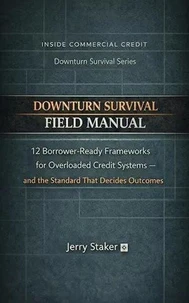
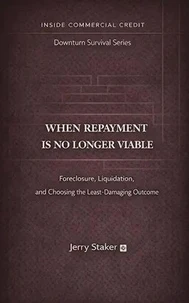
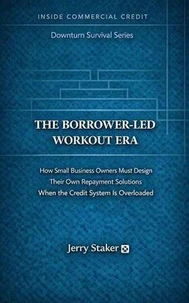
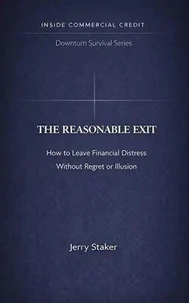
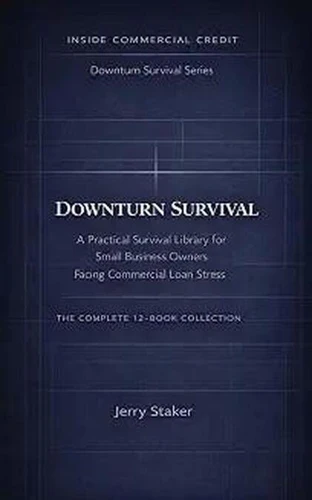
Book #14 – Inside Commercial Credit: Downturn Survival: A Practical Survival Library for Small Business Owners Facing Commercial Loan Stress. Inside Commercial Credit - Downturn Survival, #14
Par :Formats :
Disponible dans votre compte client Decitre ou Furet du Nord dès validation de votre commande. Le format ePub est :
- Compatible avec une lecture sur My Vivlio (smartphone, tablette, ordinateur)
- Compatible avec une lecture sur liseuses Vivlio
- Pour les liseuses autres que Vivlio, vous devez utiliser le logiciel Adobe Digital Edition. Non compatible avec la lecture sur les liseuses Kindle, Remarkable et Sony
 , qui est-ce ?
Notre partenaire de plateforme de lecture numérique où vous retrouverez l'ensemble de vos ebooks gratuitement
Pour en savoir plus sur nos ebooks, consultez notre aide en ligne ici
C'est si simple ! Lisez votre ebook avec l'app Vivlio sur votre tablette, mobile ou ordinateur :

- FormatePub
- ISBN8235458727
- EAN9798235458727
- Date de parution28/07/2026
- Protection num.pas de protection
- Infos supplémentairesepub
- ÉditeurIoakim Ioakim
Résumé
Most small business owners believe commercial credit works one way. They are wrong - and the error only becomes visible when the economy turns. Inside Commercial Credit: Downturn Survival is the complete master collection of the Inside Commercial Credit series, bringing together twelve integrated books that explain how commercial lending actually works under stress - not in theory, not in marketing materials, and not in hindsight.
This is not a motivational book. It is not a legal guide. It is not a negotiation manual. It is a survival library. It is also the integrated framework of the entire series - bringing together perception, structure, signals, classification, control, timing, borrower action, constraint, and resolution into a single, unified system. Written for small business owners, commercial borrowers, guarantors, and stakeholders, this collection explains how lenders think, how decisions are made internally, and why borrowers often lose control without realizing it.
It traces the full arc of a distressed commercial loan - from early warning signals to restructuring, from refinance failure to exit - and does so without false hope, moralizing, or blame. Across twelve volumes, this master collection explains: · Why borrowing rules change when the economy contracts· How lenders actually see your loan inside the credit file· Why loan documents are not neutral· Which numbers truly decide outcomes· How early warning signals are missed· What happens when a loan enters special assets· The tools lenders use during stress· Why loans fail at maturity even when payments are current· How borrowers can lead repayment and workout conversations· What disclosable loan modifications really allow - and prohibit· How to exit distressed credit when repayment is no longer viable· How to apply the reasonable-man standard to leave without regretThis collection does not promise rescue.
It explains constraint. It reinforces the central premise of the series: when credit systems are under strain, outcomes are determined not by effort or intent, but by alignment with structure, timing, feasibility, and institutional constraint. Borrowers who understand constraint can still preserve agency. Borrowers who do not are surprised by outcomes they never saw coming. Inside Commercial Credit: Downturn Survival is designed to be read sequentially or used as a reference library.
Each book stands on its own; together, they form a unified framework for navigating commercial loan stress with clarity, discipline, and realism. Each volume represents a specific stage of the system. This collection shows how those stages connect - and how borrowers move through them, often without realizing it. This is not about beating the lender. It is about understanding the system well enough to avoid avoidable damage.
When systems tighten, understanding the full structure - not just individual moments - is what preserves optionality.
This is not a motivational book. It is not a legal guide. It is not a negotiation manual. It is a survival library. It is also the integrated framework of the entire series - bringing together perception, structure, signals, classification, control, timing, borrower action, constraint, and resolution into a single, unified system. Written for small business owners, commercial borrowers, guarantors, and stakeholders, this collection explains how lenders think, how decisions are made internally, and why borrowers often lose control without realizing it.
It traces the full arc of a distressed commercial loan - from early warning signals to restructuring, from refinance failure to exit - and does so without false hope, moralizing, or blame. Across twelve volumes, this master collection explains: · Why borrowing rules change when the economy contracts· How lenders actually see your loan inside the credit file· Why loan documents are not neutral· Which numbers truly decide outcomes· How early warning signals are missed· What happens when a loan enters special assets· The tools lenders use during stress· Why loans fail at maturity even when payments are current· How borrowers can lead repayment and workout conversations· What disclosable loan modifications really allow - and prohibit· How to exit distressed credit when repayment is no longer viable· How to apply the reasonable-man standard to leave without regretThis collection does not promise rescue.
It explains constraint. It reinforces the central premise of the series: when credit systems are under strain, outcomes are determined not by effort or intent, but by alignment with structure, timing, feasibility, and institutional constraint. Borrowers who understand constraint can still preserve agency. Borrowers who do not are surprised by outcomes they never saw coming. Inside Commercial Credit: Downturn Survival is designed to be read sequentially or used as a reference library.
Each book stands on its own; together, they form a unified framework for navigating commercial loan stress with clarity, discipline, and realism. Each volume represents a specific stage of the system. This collection shows how those stages connect - and how borrowers move through them, often without realizing it. This is not about beating the lender. It is about understanding the system well enough to avoid avoidable damage.
When systems tighten, understanding the full structure - not just individual moments - is what preserves optionality.