Nouveauté
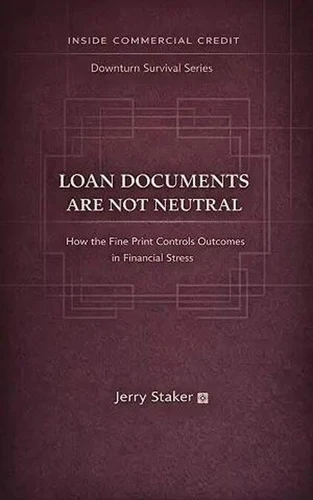
Book #3 – Loan Documents Are Not Neutral: How the Fine Print Controls Outcomes in Financial Stress. Inside Commercial Credit - Downturn Survival, #3
Par :Formats :
Disponible dans votre compte client Decitre ou Furet du Nord dès validation de votre commande. Le format ePub est :
- Compatible avec une lecture sur My Vivlio (smartphone, tablette, ordinateur)
- Compatible avec une lecture sur liseuses Vivlio
- Pour les liseuses autres que Vivlio, vous devez utiliser le logiciel Adobe Digital Edition. Non compatible avec la lecture sur les liseuses Kindle, Remarkable et Sony
 , qui est-ce ?
Notre partenaire de plateforme de lecture numérique où vous retrouverez l'ensemble de vos ebooks gratuitement
Pour en savoir plus sur nos ebooks, consultez notre aide en ligne ici
C'est si simple ! Lisez votre ebook avec l'app Vivlio sur votre tablette, mobile ou ordinateur :

- FormatePub
- ISBN8235871489
- EAN9798235871489
- Date de parution24/07/2026
- Protection num.pas de protection
- Infos supplémentairesepub
- ÉditeurIoakim Ioakim
Résumé
Most borrowers believe loan documents are passive records - paperwork that only matters if something goes wrong. That belief is one of the most expensive misunderstandings in commercial credit. In reality, loan documents are control instruments. They determine who has discretion, who must react, how quickly pressure escalates, and what options survive once financial stress appears. Long before default, the fine print quietly reshapes leverage, timing, and outcomes.
Loan Documents Are Not Neutral explains how promissory notes, loan agreements, covenants, and enforcement provisions actually function inside the credit system - especially during downturns. This book is not about legal theory. It is about practical power. It is also about what happens when systems are under strain and written agreements - not relationships - become the primary drivers of control.
Drawing on real-world commercial lending, workout, and special-assets experience, Jerry Staker shows how lenders interpret documents under stress, why "technical" provisions become very real, and how borrowers often lose control without realizing that the paper - not the lender - is driving the process. Inside this book, you will learn:· Why "boilerplate" language is never neutral· The real difference between Promissory Notes and Loan Agreements· How covenants act as early-warning and control triggers· Why technical defaults suddenly become enforceable· How inspection rights, access clauses, and cross-defaults accelerate pressure· Why enforcement is often selective - and what that signals· The most common borrower mistakes hidden in plain sight· How documents become leverage in negotiation· How to read your own loan documents the way a creditor doesThis volume reinforces a core principle of the series: when discretionary flexibility disappears, structure governs outcomes - and structure is defined in writing long before stress appears.
This book is written for small business owners, real estate borrowers, guarantors, and stakeholders who need to understand not just what their documents say - but what those documents do when conditions deteriorate. Related volumes examine how those document-based controls interact with financial metrics, internal risk ratings, and lender action as stress escalates. Loan documents do not wait for bad intentions.
They activate when facts change. Borrowers who understand this early retain flexibility. Those who learn it late discover that the outcome was decided on paper long before the conversation began.
Loan Documents Are Not Neutral explains how promissory notes, loan agreements, covenants, and enforcement provisions actually function inside the credit system - especially during downturns. This book is not about legal theory. It is about practical power. It is also about what happens when systems are under strain and written agreements - not relationships - become the primary drivers of control.
Drawing on real-world commercial lending, workout, and special-assets experience, Jerry Staker shows how lenders interpret documents under stress, why "technical" provisions become very real, and how borrowers often lose control without realizing that the paper - not the lender - is driving the process. Inside this book, you will learn:· Why "boilerplate" language is never neutral· The real difference between Promissory Notes and Loan Agreements· How covenants act as early-warning and control triggers· Why technical defaults suddenly become enforceable· How inspection rights, access clauses, and cross-defaults accelerate pressure· Why enforcement is often selective - and what that signals· The most common borrower mistakes hidden in plain sight· How documents become leverage in negotiation· How to read your own loan documents the way a creditor doesThis volume reinforces a core principle of the series: when discretionary flexibility disappears, structure governs outcomes - and structure is defined in writing long before stress appears.
This book is written for small business owners, real estate borrowers, guarantors, and stakeholders who need to understand not just what their documents say - but what those documents do when conditions deteriorate. Related volumes examine how those document-based controls interact with financial metrics, internal risk ratings, and lender action as stress escalates. Loan documents do not wait for bad intentions.
They activate when facts change. Borrowers who understand this early retain flexibility. Those who learn it late discover that the outcome was decided on paper long before the conversation began.