SOLDES
Jusqu'à -70% sur une sélection d'articles*

Nouveauté
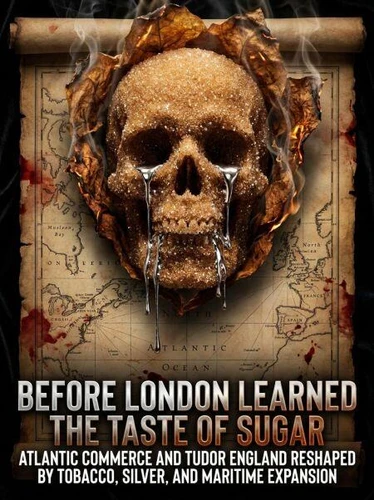
Before London Learned the Taste of Sugar. Atlantic commerce and Tudor England reshaped by tobacco, silver, and maritime expansion
Par :Formats :
Disponible dans votre compte client Decitre ou Furet du Nord dès validation de votre commande. Le format ePub est :
- Compatible avec une lecture sur My Vivlio (smartphone, tablette, ordinateur)
- Compatible avec une lecture sur liseuses Vivlio
- Pour les liseuses autres que Vivlio, vous devez utiliser le logiciel Adobe Digital Edition. Non compatible avec la lecture sur les liseuses Kindle, Remarkable et Sony
 , qui est-ce ?
Notre partenaire de plateforme de lecture numérique où vous retrouverez l'ensemble de vos ebooks gratuitement
Pour en savoir plus sur nos ebooks, consultez notre aide en ligne ici
C'est si simple ! Lisez votre ebook avec l'app Vivlio sur votre tablette, mobile ou ordinateur :

- Nombre de pages151
- FormatePub
- ISBN978-3-565-47847-7
- EAN9783565478477
- Date de parution05/06/2026
- Protection num.pas de protection
- Taille1 Mo
- Infos supplémentairesepub
- ÉditeurEmphaloz Publishing House
Résumé
England did not cross the Atlantic unchanged. Long before formal empire hardened into policy, the arrival of tobacco, Caribbean sugar, and American silver transformed daily life across Tudor Britain. Markets expanded, old hierarchies weakened, and port cities began reorganizing themselves around distant oceans rather than nearby fields.
This book traces how commodities from the Americas altered economic and social structures throughout Atlantic Britain.
Imported goods once treated as luxuries gradually entered wider urban consumption, reshaping relationships between labor, status, and political influence. The profits of trans-Atlantic trade strengthened merchant families whose growing wealth challenged older forms of land-based authority rooted in feudal tradition. At the same time, maritime expansion forced the English Crown to redefine legal power at sea.
Royal charters, privateering licenses, and emerging naval doctrines blurred the line between commerce and sanctioned violence. Pirates could become patriotic agents when imperial competition demanded it. The Atlantic world therefore emerged not only through exploration, but through legal improvisation designed to secure trade routes and weaken rival empires. The result is a portrait of Tudor England as a society already becoming oceanic long before it fully understood the consequences of that transformation.
Imported goods once treated as luxuries gradually entered wider urban consumption, reshaping relationships between labor, status, and political influence. The profits of trans-Atlantic trade strengthened merchant families whose growing wealth challenged older forms of land-based authority rooted in feudal tradition. At the same time, maritime expansion forced the English Crown to redefine legal power at sea.
Royal charters, privateering licenses, and emerging naval doctrines blurred the line between commerce and sanctioned violence. Pirates could become patriotic agents when imperial competition demanded it. The Atlantic world therefore emerged not only through exploration, but through legal improvisation designed to secure trade routes and weaken rival empires. The result is a portrait of Tudor England as a society already becoming oceanic long before it fully understood the consequences of that transformation.