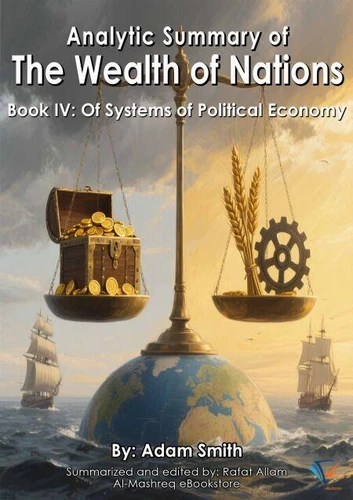
Analytic Summary of The Wealth of Nations. Book IV: Of Systems of Political Economy
Par : ,Formats :
Disponible dans votre compte client Decitre ou Furet du Nord dès validation de votre commande. Le format ePub protégé est :
- Compatible avec une lecture sur My Vivlio (smartphone, tablette, ordinateur)
- Compatible avec une lecture sur liseuses Vivlio
- Pour les liseuses autres que Vivlio, vous devez utiliser le logiciel Adobe Digital Edition. Non compatible avec la lecture sur les liseuses Kindle, Remarkable et Sony
- Non compatible avec un achat hors France métropolitaine
 , qui est-ce ?
Notre partenaire de plateforme de lecture numérique où vous retrouverez l'ensemble de vos ebooks gratuitement
Pour en savoir plus sur nos ebooks, consultez notre aide en ligne ici
C'est si simple ! Lisez votre ebook avec l'app Vivlio sur votre tablette, mobile ou ordinateur :

- Nombre de pages350
- FormatePub
- ISBN978-2-16-766989-4
- EAN9782167669894
- Date de parution10/12/2025
- Protection num.Adobe DRM
- Taille366 Ko
- Infos supplémentairesepub
- ÉditeurCode Errone
Résumé
In The Wealth of Nations, Book IV: Of Systems of Political Economy, Adam Smith takes aim at the reigning economic ideologies of his time-mercantilism and agricultural absolutism-and delivers one of the most powerful manifestos for economic freedom ever written. With sharp wit and relentless logic, he exposes how mercantilist policies-prohibitions, bounties, tariffs, monopolies, and colonial systems-served narrow merchant interests while burdening the public with higher prices, waste, and endless wars.
He then turns to the agricultural systems, particularly the French Physiocrats, recognizing their insights but critiquing their narrow focus on land as the sole source of wealth. Against both doctrines, Smith advances his enduring principle of natural liberty, in which individuals, left free to pursue their own interests, direct labor and capital to their most productive uses, thereby enriching the entire nation.
This book is not merely a critique; it is a bold vision of a world beyond restrictive systems, a call for free trade, competition, and prosperity that still resonates in every debate on globalization today.
He then turns to the agricultural systems, particularly the French Physiocrats, recognizing their insights but critiquing their narrow focus on land as the sole source of wealth. Against both doctrines, Smith advances his enduring principle of natural liberty, in which individuals, left free to pursue their own interests, direct labor and capital to their most productive uses, thereby enriching the entire nation.
This book is not merely a critique; it is a bold vision of a world beyond restrictive systems, a call for free trade, competition, and prosperity that still resonates in every debate on globalization today.