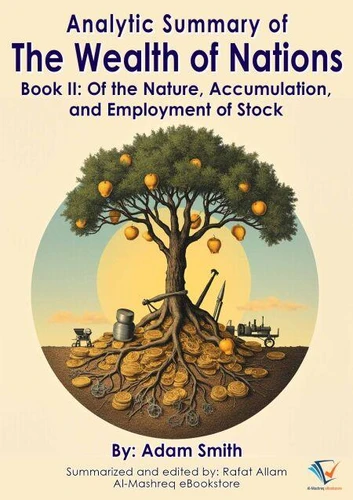
Analytic Summary of The Wealth of Nations. Book II: Of the Nature, Accumulation, and Employment of Stock
Par : ,Formats :
Disponible dans votre compte client Decitre ou Furet du Nord dès validation de votre commande. Le format ePub protégé est :
- Compatible avec une lecture sur My Vivlio (smartphone, tablette, ordinateur)
- Compatible avec une lecture sur liseuses Vivlio
- Pour les liseuses autres que Vivlio, vous devez utiliser le logiciel Adobe Digital Edition. Non compatible avec la lecture sur les liseuses Kindle, Remarkable et Sony
- Non compatible avec un achat hors France métropolitaine
 , qui est-ce ?
Notre partenaire de plateforme de lecture numérique où vous retrouverez l'ensemble de vos ebooks gratuitement
Pour en savoir plus sur nos ebooks, consultez notre aide en ligne ici
C'est si simple ! Lisez votre ebook avec l'app Vivlio sur votre tablette, mobile ou ordinateur :

- Nombre de pages150
- FormatePub
- ISBN978-2-16-255310-5
- EAN9782162553105
- Date de parution10/12/2025
- Protection num.Adobe DRM
- Taille394 Ko
- Infos supplémentairesepub
- ÉditeurCode Errone
Résumé
In The Wealth of Nations, Book II: Of the Nature, Accumulation, and Employment of Stock, Adam Smith pulls back the curtain on the lifeblood of every economy: capital. He reveals how savings, investment, and the wise use of stock fuel prosperity, while waste and extravagance drain it. Through clear distinctions between fixed and circulating capital, productive and unproductive labor, and the different employments of stock-from agriculture and industry to trade and foreign commerce-Smith builds a vision of how nations either thrive or stagnate.
This book is not a dry theory; it is a story of choices-how merchants, farmers, landlords, and governments decide to use wealth, and how those decisions ripple through entire societies. By understanding Smith's insights, readers can see the hidden engines of growth, the dangers of reckless credit, and why some investments enrich nations while others impoverish them. For anyone who wants to grasp the roots of economic power, this book is a masterclass in the timeless laws of prosperity.
This book is not a dry theory; it is a story of choices-how merchants, farmers, landlords, and governments decide to use wealth, and how those decisions ripple through entire societies. By understanding Smith's insights, readers can see the hidden engines of growth, the dangers of reckless credit, and why some investments enrich nations while others impoverish them. For anyone who wants to grasp the roots of economic power, this book is a masterclass in the timeless laws of prosperity.
A propos de Adam Smith






The Wealth of Nations
E-book
0,99 €