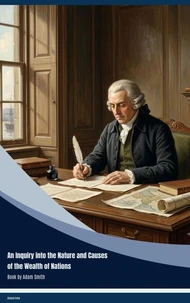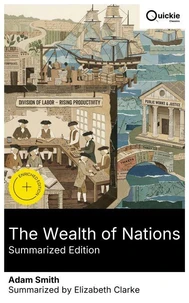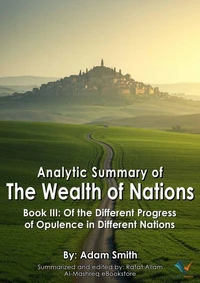
Analytic Summary of The Wealth of Nations. Book I: Of the Causes of Improvement in the Productive Powers of Labor
Par : ,Formats :
Disponible dans votre compte client Decitre ou Furet du Nord dès validation de votre commande. Le format ePub est :
- Compatible avec une lecture sur My Vivlio (smartphone, tablette, ordinateur)
- Compatible avec une lecture sur liseuses Vivlio
- Pour les liseuses autres que Vivlio, vous devez utiliser le logiciel Adobe Digital Edition. Non compatible avec la lecture sur les liseuses Kindle, Remarkable et Sony
 , qui est-ce ?
Notre partenaire de plateforme de lecture numérique où vous retrouverez l'ensemble de vos ebooks gratuitement
Pour en savoir plus sur nos ebooks, consultez notre aide en ligne ici
C'est si simple ! Lisez votre ebook avec l'app Vivlio sur votre tablette, mobile ou ordinateur :

- Nombre de pages250
- FormatePub
- ISBN978-1-259-45563-6
- EAN9781259455636
- Date de parution15/09/2025
- Protection num.Digital Watermarking
- Taille416 Ko
- Infos supplémentairesepub
- ÉditeurMcGraw-Hill Education
Résumé
Step into the mind of Adam Smith, the father of modern economics, and discover the groundbreaking ideas that forever changed the way we understand wealth, trade, and human progress. The Wealth of Nations is not just a book of theory-it is a living exploration of how ordinary human instincts, like the urge to exchange and the pursuit of self-interest, shape the prosperity of entire societies. Through vivid examples-from pin factories to the woolen coat on a laborer's back-Smith unveils how specialization, markets, and money create abundance, and how wages, profits, and rents distribute that abundance across classes.
More than two centuries later, his insights on free markets, monopolies, and the delicate balance between labor and capital remain as strikingly relevant as ever. This is not merely an economics book-it is a powerful story of human ambition, cooperation, and the invisible forces that continue to shape nations today. Anyone curious about the roots of capitalism, the foundations of prosperity, or the timeless struggles between workers, employers, and landlords will find this classic both eye-opening and indispensable.
More than two centuries later, his insights on free markets, monopolies, and the delicate balance between labor and capital remain as strikingly relevant as ever. This is not merely an economics book-it is a powerful story of human ambition, cooperation, and the invisible forces that continue to shape nations today. Anyone curious about the roots of capitalism, the foundations of prosperity, or the timeless struggles between workers, employers, and landlords will find this classic both eye-opening and indispensable.