SOLDES
Jusqu'à -70% sur une sélection d'articles*

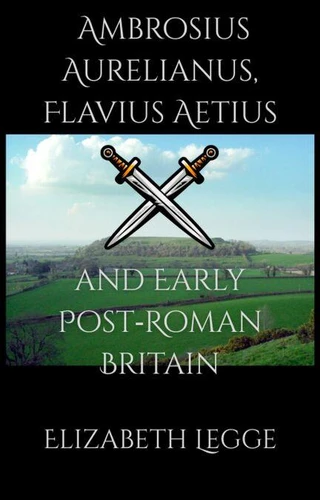
Ambrosius Aurelianus, Flavius Aetius, and Early Post-Roman Britain. Beneath the Ancient World: Strategic Readings of Ancient Texts, #4
Par :Formats :
Disponible dans votre compte client Decitre ou Furet du Nord dès validation de votre commande. Le format ePub est :
- Compatible avec une lecture sur My Vivlio (smartphone, tablette, ordinateur)
- Compatible avec une lecture sur liseuses Vivlio
- Pour les liseuses autres que Vivlio, vous devez utiliser le logiciel Adobe Digital Edition. Non compatible avec la lecture sur les liseuses Kindle, Remarkable et Sony
 , qui est-ce ?
Notre partenaire de plateforme de lecture numérique où vous retrouverez l'ensemble de vos ebooks gratuitement
Pour en savoir plus sur nos ebooks, consultez notre aide en ligne ici
C'est si simple ! Lisez votre ebook avec l'app Vivlio sur votre tablette, mobile ou ordinateur :

- FormatePub
- ISBN8233121067
- EAN9798233121067
- Date de parution27/12/2025
- Protection num.pas de protection
- Infos supplémentairesepub
- ÉditeurLinda Balsamo
Résumé
In the fifth century, as Rome's empire fractured, Britain stood at the edge of history. Flavius Aetius, Ambrosius Aurelianus and Early Post-Roman Britain examines the twilight of Roman rule and the emergence of new leaders who defended a fragile land against Saxon incursions. Elizabeth Legge brings together archaeology, historiography, and reception history to illuminate figures often shrouded in legend.
Flavius Aetius, the "last of the Romans, " and Ambrosius Aurelianus, remembered by Gildas as Britain's champion, are set against the backdrop of Cadbury Castle, Armorica, and the Battle of Badon. Drawing on villa discoveries, mosaics, and fortifications, this study anchors myth in material evidence, showing how continuity and collapse intertwined in Britain's long transition. This is a living book: a work that will grow with new essays, illustrations, and scholarly expansions.
It invites readers into an evolving conversation about identity, resilience, and the echoes of Rome in Britain's early medieval dawn. For historians, archaeologists, and enthusiasts of Arthurian origins, this volume offers both rigorous synthesis and narrative richness. It situates Britain within the wider currents of Late Antiquity - politics, medicine, war - while foregrounding the local landscapes and leaders who shaped its destiny.
The first chapters are based on a conference presentation given in 2023 for the British Medieval Archaeology Society. Whether read as a standalone study or alongside Legge's Echoes of Ancient Rome series, this book provides a compelling lens on the twilight of empire and the birth of a new world.
Flavius Aetius, the "last of the Romans, " and Ambrosius Aurelianus, remembered by Gildas as Britain's champion, are set against the backdrop of Cadbury Castle, Armorica, and the Battle of Badon. Drawing on villa discoveries, mosaics, and fortifications, this study anchors myth in material evidence, showing how continuity and collapse intertwined in Britain's long transition. This is a living book: a work that will grow with new essays, illustrations, and scholarly expansions.
It invites readers into an evolving conversation about identity, resilience, and the echoes of Rome in Britain's early medieval dawn. For historians, archaeologists, and enthusiasts of Arthurian origins, this volume offers both rigorous synthesis and narrative richness. It situates Britain within the wider currents of Late Antiquity - politics, medicine, war - while foregrounding the local landscapes and leaders who shaped its destiny.
The first chapters are based on a conference presentation given in 2023 for the British Medieval Archaeology Society. Whether read as a standalone study or alongside Legge's Echoes of Ancient Rome series, this book provides a compelling lens on the twilight of empire and the birth of a new world.