SOLDES
Jusqu'à -70% sur une sélection d'articles*

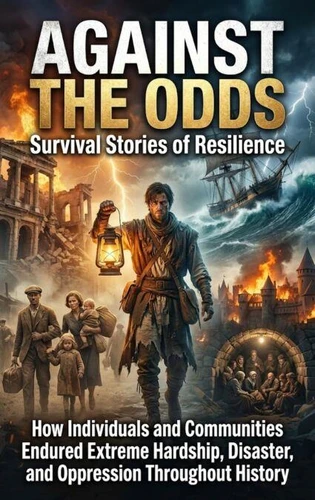
Against the Odds: Survival Stories of Resilience. How Individuals and Communities Endured Extreme Hardship, Disaster, and Oppression Throughout History
Par :Formats :
Disponible dans votre compte client Decitre ou Furet du Nord dès validation de votre commande. Le format ePub est :
- Compatible avec une lecture sur My Vivlio (smartphone, tablette, ordinateur)
- Compatible avec une lecture sur liseuses Vivlio
- Pour les liseuses autres que Vivlio, vous devez utiliser le logiciel Adobe Digital Edition. Non compatible avec la lecture sur les liseuses Kindle, Remarkable et Sony
 , qui est-ce ?
Notre partenaire de plateforme de lecture numérique où vous retrouverez l'ensemble de vos ebooks gratuitement
Pour en savoir plus sur nos ebooks, consultez notre aide en ligne ici
C'est si simple ! Lisez votre ebook avec l'app Vivlio sur votre tablette, mobile ou ordinateur :

- Nombre de pages194
- FormatePub
- ISBN978-3-565-24942-8
- EAN9783565249428
- Date de parution15/02/2026
- Protection num.pas de protection
- Taille1 Mo
- Infos supplémentairesepub
- ÉditeurEmphaloz Publishing House
Résumé
Human resilience under extreme conditions reveals both individual determination and the social structures that enable survival. This comprehensive examination explores how people endured catastrophic circumstances across history-from siege warfare and maritime disasters through natural calamities and forced displacement to concentration camps and political persecution-analyzing the strategies, support networks, and psychological factors that determined who survived and how.
Drawing on survivor testimonies, rescue records, archaeological findings, and psychological research, this book reveals the patterns of survival beyond individual heroism.
It explores how communities maintained social bonds under stress, how cultural practices provided psychological anchoring, and how practical knowledge and mutual aid networks proved decisive. The narrative examines the role of chance alongside preparation, how hierarchies shaped survival opportunities, and what survivors faced during reconstruction. Each account demonstrates how survival required both individual resourcefulness and collective support, how trauma affected survivors long afterward, and how societies memorialized or marginalized survival experiences.
It analyzes physical adaptation to extreme conditions, decision-making under pressure, and the ethical dilemmas survivors confronted. Without romanticizing suffering or reducing survival to individual willpower, this work provides rigorous analysis of human endurance and the conditions that make resilience possible.
It explores how communities maintained social bonds under stress, how cultural practices provided psychological anchoring, and how practical knowledge and mutual aid networks proved decisive. The narrative examines the role of chance alongside preparation, how hierarchies shaped survival opportunities, and what survivors faced during reconstruction. Each account demonstrates how survival required both individual resourcefulness and collective support, how trauma affected survivors long afterward, and how societies memorialized or marginalized survival experiences.
It analyzes physical adaptation to extreme conditions, decision-making under pressure, and the ethical dilemmas survivors confronted. Without romanticizing suffering or reducing survival to individual willpower, this work provides rigorous analysis of human endurance and the conditions that make resilience possible.
A propos de Alina Frost














8,99 €