Nouveauté
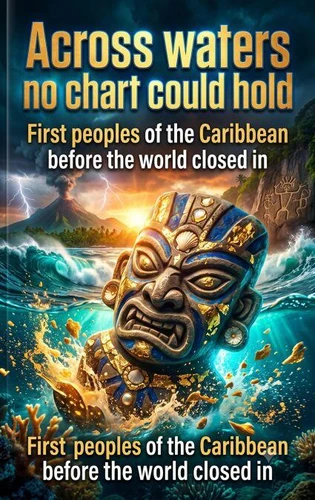
Across waters no chart could hold. First peoples of the Caribbean before the world closed in
Par :Formats :
Disponible dans votre compte client Decitre ou Furet du Nord dès validation de votre commande. Le format ePub est :
- Compatible avec une lecture sur My Vivlio (smartphone, tablette, ordinateur)
- Compatible avec une lecture sur liseuses Vivlio
- Pour les liseuses autres que Vivlio, vous devez utiliser le logiciel Adobe Digital Edition. Non compatible avec la lecture sur les liseuses Kindle, Remarkable et Sony
 , qui est-ce ?
Notre partenaire de plateforme de lecture numérique où vous retrouverez l'ensemble de vos ebooks gratuitement
Pour en savoir plus sur nos ebooks, consultez notre aide en ligne ici
C'est si simple ! Lisez votre ebook avec l'app Vivlio sur votre tablette, mobile ou ordinateur :

- Nombre de pages199
- FormatePub
- ISBN978-3-565-54859-0
- EAN9783565548590
- Date de parution08/07/2026
- Protection num.pas de protection
- Taille2 Mo
- Infos supplémentairesepub
- ÉditeurEmphaloz Publishing House
Résumé
The moment a European keel touched Caribbean sand, something ended that could never be named. This book watches that moment from the shore, not the deck. It traces how entire societies-the Taíno, the Kalinago, the peoples of the Greater Antilles-were unmade not only by steel and disease but by a profound failure of the imagination. The Spanish saw gold and souls; the people they met saw guests who refused to leave.
What unfolded was less a war than a slow ontological collapse, where one world's arrival meant another's erasure. Drawing on early Spanish chronicles, indigenous oral traditions preserved in fragments, and archaeological evidence, the narrative follows the first decades of contact as a series of misunderstandings that became traps. The encomienda system, the requerimiento, the missions-each was a mechanism that assumed the other had no history worth keeping.
By the time anyone asked what had been lost, most of those who could answer were already gone. This is not a story of conquest as victory. It is a story of arrival as catastrophe, told from the side of those who received the ships.
What unfolded was less a war than a slow ontological collapse, where one world's arrival meant another's erasure. Drawing on early Spanish chronicles, indigenous oral traditions preserved in fragments, and archaeological evidence, the narrative follows the first decades of contact as a series of misunderstandings that became traps. The encomienda system, the requerimiento, the missions-each was a mechanism that assumed the other had no history worth keeping.
By the time anyone asked what had been lost, most of those who could answer were already gone. This is not a story of conquest as victory. It is a story of arrival as catastrophe, told from the side of those who received the ships.
A propos de Ryan Holloway

24,99 €