OFFRE LISEUSES
Une liseuse achetée = une housse offerte* jusqu'au 21 juin
- Accueil /
- Oliver Rathkolb
Oliver Rathkolb

Dernière sortie
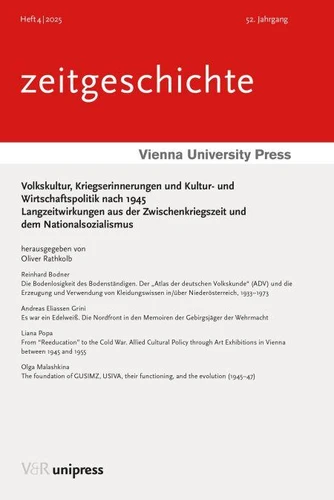
Volkskultur, Kriegserinnerungen und Kultur- und Wirtschaftspolitik nach 1945
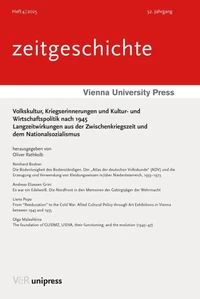
Auf den ersten Blick scheint den vier Beiträgen eine gemeinsame, verbindende These zu fehlen. Tatsächlich setzen sich die Autor:innen mit den Nachwirkungen von kulturellen, mentalgeschichtlichen und wirtschaftlichen Entwicklungen aus der Zwischenkriegs- und NS-Zeit bis in die lange Nachkriegszeit auseinander. Die Brandbreite der Analysen reicht von der Konstruktion einer bodenständigen Tracht in Niederösterreich 1933-1973, mit ursprünglich deutschnationalen Prägungen, bis zur Konstruktion der naturverbundenen Gebirgsjäger der deutschen Wehrmacht in Norwegen und Finnland.
Besonders stark auf die Nachkriegszeit fokussiert ist der Beitrag zur alliierten Kunst- und Ausstellungspolitik in Wien zwischen 1945 und 1955, der deren Auswirkungen auf Künstler:innen, Publikum und Medien untersucht. Ebenfalls in die alliierte Zeit nach 1945 reicht der Artikel über die Etablierung der sowjetischen Verwaltung des beschlagnahmten deutschen Industrieeigentums bis 1947. At first glance, there seems to be a missing common and connecting thesis to the four contributions.
In fact, the authors discuss the aftermath of the cultural, mental-historical and economic developments between both World War I and World War II, the Nazi regime and the long post war period. The analyses range from the construction of ingenious attires in Lower Austria (1933 to 1973) with original German national imprints, to the construction of nature loving mountain infantry of the German Wehrmacht in Norway and Finland.
The contribution on the post war period especially focus on art and exhibition policy in Vienna between 1945 and 1955 by the allies and their impact on artists, audience and media. The contribution on the establishment of the Soviet administration on the German confiscated industrial assets until 1947 also focuses on the period of the occupation by the allies.
Besonders stark auf die Nachkriegszeit fokussiert ist der Beitrag zur alliierten Kunst- und Ausstellungspolitik in Wien zwischen 1945 und 1955, der deren Auswirkungen auf Künstler:innen, Publikum und Medien untersucht. Ebenfalls in die alliierte Zeit nach 1945 reicht der Artikel über die Etablierung der sowjetischen Verwaltung des beschlagnahmten deutschen Industrieeigentums bis 1947. At first glance, there seems to be a missing common and connecting thesis to the four contributions.
In fact, the authors discuss the aftermath of the cultural, mental-historical and economic developments between both World War I and World War II, the Nazi regime and the long post war period. The analyses range from the construction of ingenious attires in Lower Austria (1933 to 1973) with original German national imprints, to the construction of nature loving mountain infantry of the German Wehrmacht in Norway and Finland.
The contribution on the post war period especially focus on art and exhibition policy in Vienna between 1945 and 1955 by the allies and their impact on artists, audience and media. The contribution on the establishment of the Soviet administration on the German confiscated industrial assets until 1947 also focuses on the period of the occupation by the allies.
Auf den ersten Blick scheint den vier Beiträgen eine gemeinsame, verbindende These zu fehlen. Tatsächlich setzen sich die Autor:innen mit den Nachwirkungen von kulturellen, mentalgeschichtlichen und wirtschaftlichen Entwicklungen aus der Zwischenkriegs- und NS-Zeit bis in die lange Nachkriegszeit auseinander. Die Brandbreite der Analysen reicht von der Konstruktion einer bodenständigen Tracht in Niederösterreich 1933-1973, mit ursprünglich deutschnationalen Prägungen, bis zur Konstruktion der naturverbundenen Gebirgsjäger der deutschen Wehrmacht in Norwegen und Finnland.
Besonders stark auf die Nachkriegszeit fokussiert ist der Beitrag zur alliierten Kunst- und Ausstellungspolitik in Wien zwischen 1945 und 1955, der deren Auswirkungen auf Künstler:innen, Publikum und Medien untersucht. Ebenfalls in die alliierte Zeit nach 1945 reicht der Artikel über die Etablierung der sowjetischen Verwaltung des beschlagnahmten deutschen Industrieeigentums bis 1947. At first glance, there seems to be a missing common and connecting thesis to the four contributions.
In fact, the authors discuss the aftermath of the cultural, mental-historical and economic developments between both World War I and World War II, the Nazi regime and the long post war period. The analyses range from the construction of ingenious attires in Lower Austria (1933 to 1973) with original German national imprints, to the construction of nature loving mountain infantry of the German Wehrmacht in Norway and Finland.
The contribution on the post war period especially focus on art and exhibition policy in Vienna between 1945 and 1955 by the allies and their impact on artists, audience and media. The contribution on the establishment of the Soviet administration on the German confiscated industrial assets until 1947 also focuses on the period of the occupation by the allies.
Besonders stark auf die Nachkriegszeit fokussiert ist der Beitrag zur alliierten Kunst- und Ausstellungspolitik in Wien zwischen 1945 und 1955, der deren Auswirkungen auf Künstler:innen, Publikum und Medien untersucht. Ebenfalls in die alliierte Zeit nach 1945 reicht der Artikel über die Etablierung der sowjetischen Verwaltung des beschlagnahmten deutschen Industrieeigentums bis 1947. At first glance, there seems to be a missing common and connecting thesis to the four contributions.
In fact, the authors discuss the aftermath of the cultural, mental-historical and economic developments between both World War I and World War II, the Nazi regime and the long post war period. The analyses range from the construction of ingenious attires in Lower Austria (1933 to 1973) with original German national imprints, to the construction of nature loving mountain infantry of the German Wehrmacht in Norway and Finland.
The contribution on the post war period especially focus on art and exhibition policy in Vienna between 1945 and 1955 by the allies and their impact on artists, audience and media. The contribution on the establishment of the Soviet administration on the German confiscated industrial assets until 1947 also focuses on the period of the occupation by the allies.
Les livres de Oliver Rathkolb

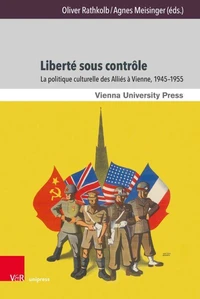
Liberté sous contrôle. La politique culturelle des Alliés à Vienne, 1945–1955
Oliver Rathkolb, Agnes Meisinger, Béatrice Pellissier, Thomas Angerer, Wolfgang Duchkowitsch
E-book
35,00 €

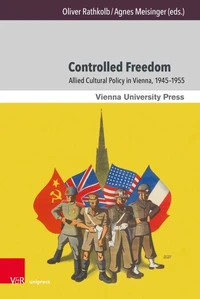
Controlled Freedom. Allied Cultural Policy in Vienna, 1945–1955
Oliver Rathkolb, Agnes Meisinger, John Heath, Thomas Angerer, Wolfgang Duchkowitsch
E-book
35,00 €

Geschichte Österreichs. Winkelbauer, Thomas – Lackner, Christian – Mazohl, Brigitte – Pohl, Walter – Rathkolb, Oliver
Thomas Winkelbauer, Christian Lackner, Brigitte Mazohl, Walter Pohl, Oliver Rathkolb
E-book
26,99 €

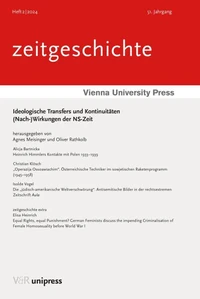
Ideologische Transfers und Kontinuitäten. (Nach-)Wirkungen der NS-Zeit
Agnes Meisinger, Oliver Rathkolb, Christian Klösch, Alicja Bartnicka, Elisa Heinrich
E-book
23,00 €

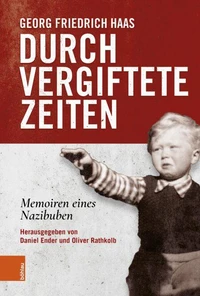
Durch vergiftete Zeiten. Memoiren eines Nazibuben
Georg Friedrich Haas, Daniel Ender, Oliver Rathkolb
E-book
40,00 €

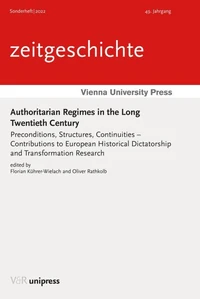
Authoritarian Regimes in the Long Twentieth Century. Preconditions, Structures, Continuities – Contributions to European Historical Dictatorship and Transformation Research
Florian Kührer-Wielach, Oliver Rathkolb, Katharina Ebner, Nathalie Patricia Soursos, Inga Paslaviciute
E-book
35,00 €

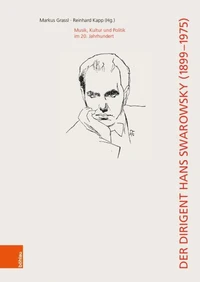
Der Dirigent Hans Swarowsky (1899–1975):. Musik, Kultur und Politik im 20. Jahrhundert
Markus Grassl, Reinhard Kapp, Oliver Rathkolb, Erika Horvath
E-book
95,00 €

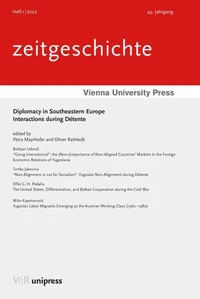
Diplomacy in Southeastern Europe. Interactions during Détente
Petra Mayrhofer, Oliver Rathkolb, Mišo Kapetanović
E-book
23,00 €

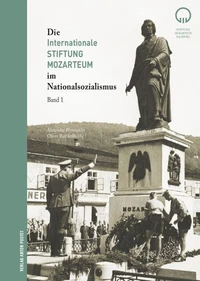
Die Internationale Stiftung Mozarteum im Nationalsozialismus
Alexander Pinwinkler, Oliver Rathkolb
E-book
16,99 €

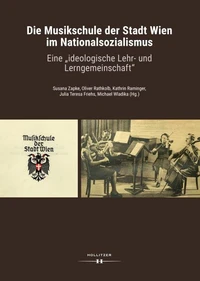
Die Musikschule der Stadt Wien im Nationalsozialismus. Eine "ideologische Lehr- und Lerngemeinschaft"
Susana Zapke, Oliver Rathkolb, Kathrin Raminger, Julia Teresa Friehs, Michael Wladika
E-book
39,99 €

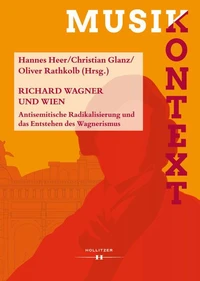
Richard Wagner und Wien. Antisemitische Radikalisierung und das Entstehen des Wagnerismus
Hannes Heer, Christian Glanz, Oliver Rathkolb
E-book
35,99 €

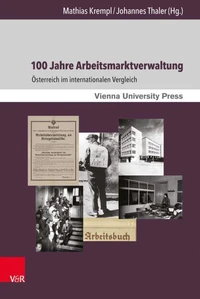
100 Jahre Arbeitsmarktverwaltung. Österreich im internationalen Vergleich
Mathias Krempl, Johannes Thaler, Oliver Rathkolb, Bundesministerium für Arbeit,,, David Chiavacci
E-book
59,00 €

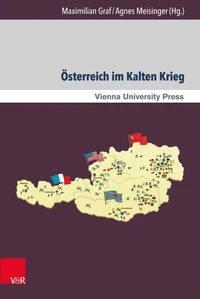
Österreich im Kalten Krieg. Neue Forschungen im internationalen Kontext
Maximilian Graf, Agnes Meisinger, Oliver Rathkolb, Andrea Brait, Christian Forstner
E-book
59,00 €

Meine Erlebnisse in dem furchtbaren Weltkriege 1914-1918. Tagebuch eines Frontsoldaten
Franz Arneitz, Andreas Kuchler, Oliver Rathkolb
E-book
9,99 €

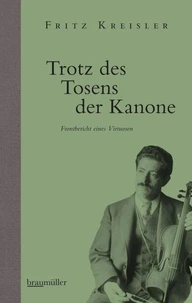
Trotz des Tosens der Kanone. Frontbericht eines Virtuosen
Fritz Kreisler, Clemens Hellsberg, Oliver Rathkolb, Brigitte Hilzensauer
E-book
16,99 €

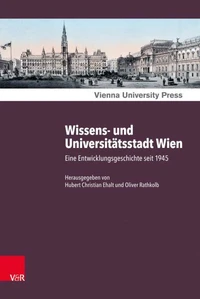
Wissens- und Universitätsstadt Wien. Eine Entwicklungsgeschichte seit 1945
Hubert Christian Ehalt, Oliver Rathkolb
E-book
75,00 €

9,99 €


Deutschlands »Drang nach Südosten«. Der Mitteleuropäische Wirtschaftstag und der »Ergänzungsraum Südosteuropa« 1931–1945
Carl Freytag, Oliver Rathkolb
E-book
89,00 €