
Brian Leslie is a coercive interrogation & interview techniques expert, with over 14 years of previous law enforcement experience which includes major case investigation and specialized training, as well as a term serving as Chief of Police. Mr. Leslie has testified and been qualified as an expert in Federal, State and Military Courts throughout the United States. You can contact Brian Leslie to consult on a case at 1-888-400-1309 or at [email protected]
Nouveauté
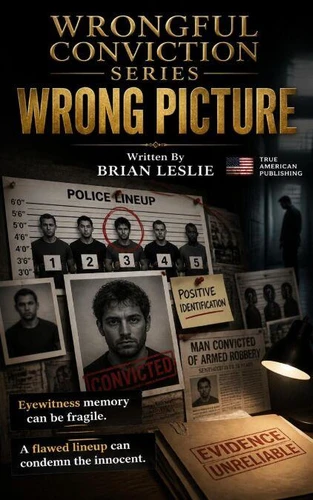
Wrong Picture. Wrongful Conviction Series, #2
Par :Formats :
Disponible dans votre compte client Decitre ou Furet du Nord dès validation de votre commande. Le format ePub est :
- Compatible avec une lecture sur My Vivlio (smartphone, tablette, ordinateur)
- Compatible avec une lecture sur liseuses Vivlio
- Pour les liseuses autres que Vivlio, vous devez utiliser le logiciel Adobe Digital Edition. Non compatible avec la lecture sur les liseuses Kindle, Remarkable et Sony
 , qui est-ce ?
Notre partenaire de plateforme de lecture numérique où vous retrouverez l'ensemble de vos ebooks gratuitement
Pour en savoir plus sur nos ebooks, consultez notre aide en ligne ici
C'est si simple ! Lisez votre ebook avec l'app Vivlio sur votre tablette, mobile ou ordinateur :

- FormatePub
- ISBN8235809314
- EAN9798235809314
- Date de parution04/08/2026
- Protection num.pas de protection
- Infos supplémentairesepub
- ÉditeurIoakim Ioakim
Résumé
A masked figure storms into a small Boston convenience store, leaving with cash and leaving Evelyn Russo, the timid store clerk, in shock. As the only eyewitness, Evelyn is left traumatized and unsure of what she saw. Detective Sean Malloy takes charge of the investigation, feeling pressure from superiors and the public to make a swift arrest. He quickly zeroes in on Marcus Bell, a quiet janitor with no criminal record who matches Evelyn's vague description.
Despite Marcus's insistence on his innocence, Malloy is determined to close the case. Officer Linda Chen arranges a six pack photographic lineup, with Marcus's photo placed among five similar faces. The process is flawed: it is not conducted double-blind, Evelyn is not informed that the perpetrator might not be present, and Malloy stands nearby, inadvertently signaling his expectations. Anxious and confused, Evelyn points to Marcus's photo, her decision clouded by subtle cues and her own uncertainty.
This shaky identification becomes the cornerstone of the prosecution's case. At trial, ADA Thomas Grady builds his argument on Evelyn's identification, eager to secure a conviction. Marcus's public defender, Carla Mendes, challenges the validity of the lineup and argues that Evelyn's memory was tainted by the suggestive process. Yet the court is swayed by the official nature of the identification and Evelyn's apparent certainty on the stand.
Marcus is convicted and sentenced, despite the lack of physical evidence. Meanwhile, the real perpetrator, Dante Price, remains at large, his crime hidden by the system's failure. The conviction leaves Evelyn haunted by doubt, while Detective Malloy begins to question his methods. Marcus's life is shattered, as he finds himself imprisoned for a crime he did not commit. The story closes with a call for reform, highlighting the dangers of flawed eyewitness identification and the urgent need for strict adherence to protocol.
The narrative underscores how a single procedural misstep can unravel lives, emphasizing the critical need for integrity and vigilance in the justice system.
Despite Marcus's insistence on his innocence, Malloy is determined to close the case. Officer Linda Chen arranges a six pack photographic lineup, with Marcus's photo placed among five similar faces. The process is flawed: it is not conducted double-blind, Evelyn is not informed that the perpetrator might not be present, and Malloy stands nearby, inadvertently signaling his expectations. Anxious and confused, Evelyn points to Marcus's photo, her decision clouded by subtle cues and her own uncertainty.
This shaky identification becomes the cornerstone of the prosecution's case. At trial, ADA Thomas Grady builds his argument on Evelyn's identification, eager to secure a conviction. Marcus's public defender, Carla Mendes, challenges the validity of the lineup and argues that Evelyn's memory was tainted by the suggestive process. Yet the court is swayed by the official nature of the identification and Evelyn's apparent certainty on the stand.
Marcus is convicted and sentenced, despite the lack of physical evidence. Meanwhile, the real perpetrator, Dante Price, remains at large, his crime hidden by the system's failure. The conviction leaves Evelyn haunted by doubt, while Detective Malloy begins to question his methods. Marcus's life is shattered, as he finds himself imprisoned for a crime he did not commit. The story closes with a call for reform, highlighting the dangers of flawed eyewitness identification and the urgent need for strict adherence to protocol.
The narrative underscores how a single procedural misstep can unravel lives, emphasizing the critical need for integrity and vigilance in the justice system.
A propos de Brian Leslie
2,99 €
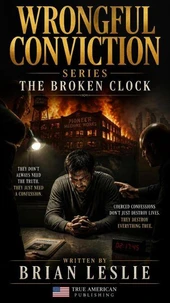
2,99 €
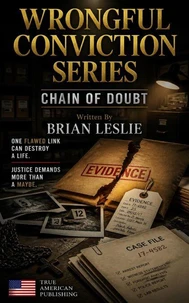
2,99 €
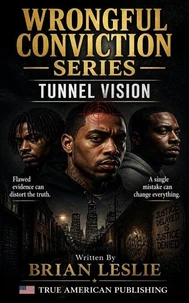
2,99 €

2,99 €
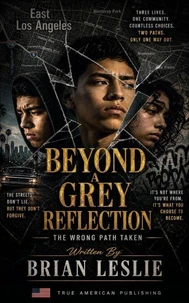
Beyond A Grey Reflection
E-book
5,49 €
5,49 €
5,49 €
A Cost To Belong
E-book
5,49 €
5,49 €

5,49 €
5,49 €
5,49 €
5,49 €

5,49 €
Diary Of A Bully
E-book
7,49 €
2,99 €