
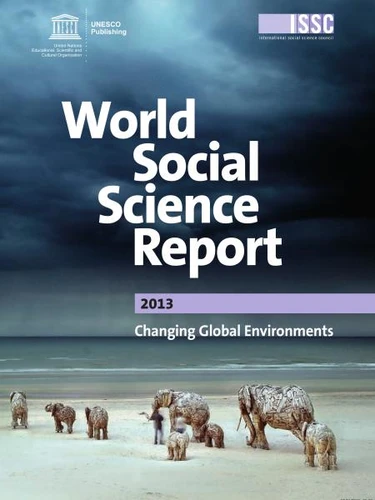
World Social Science Report 2013. Changing Global Environments
Par :Formats :
Disponible dans votre compte client Decitre ou Furet du Nord dès validation de votre commande. Le format PDF est :
- Compatible avec une lecture sur My Vivlio (smartphone, tablette, ordinateur)
- Compatible avec une lecture sur liseuses Vivlio
- Pour les liseuses autres que Vivlio, vous devez utiliser le logiciel Adobe Digital Edition. Non compatible avec la lecture sur les liseuses Kindle, Remarkable et Sony
 , qui est-ce ?
Notre partenaire de plateforme de lecture numérique où vous retrouverez l'ensemble de vos ebooks gratuitement
Pour en savoir plus sur nos ebooks, consultez notre aide en ligne ici
C'est si simple ! Lisez votre ebook avec l'app Vivlio sur votre tablette, mobile ou ordinateur :

- Nombre de pages612
- FormatPDF
- ISBN978-92-64-20341-9
- EAN9789264203419
- Date de parution15/11/2013
- Protection num.Digital Watermarking
- Taille5 Mo
- Infos supplémentairespdf
- ÉditeurOECD
Résumé
Produced by the International Social Science Council (ISSC) and UNESCO, and published by the OECD, the 2013 World Social Science Report represents a comprehensive overview of the field gathering the thoughts and expertise of hundreds of social scientists from around the world. This edition focuses on the transformative role of the social sciences in confronting climate and broader processes of environmental change, and in addressing priority problems from energy and water, biodiversity and land use, to urbanisation, migration and education.
The report includes 100 articles written by 150 authors from 41 countries all over the world. Authors represent some 24 disciplines, mainly in the social sciences. The contributions highlight the central importance of social science knowledge for environmental change research, as a means of understanding changing environments in terms of social processes and as framework for finding concrete solutions towards sustainability.
The report includes 100 articles written by 150 authors from 41 countries all over the world. Authors represent some 24 disciplines, mainly in the social sciences. The contributions highlight the central importance of social science knowledge for environmental change research, as a means of understanding changing environments in terms of social processes and as framework for finding concrete solutions towards sustainability.
A propos de OCDE


32,99 €

72,99 €

33,99 €

32,99 €
32,99 €

32,00 €

25,00 €

Tax compilance by design
E-book
16,00 €

16,00 €

19,00 €

16,00 €


23,00 €

Women in business 2014
E-book
31,00 €


27,00 €