SOLDES
Jusqu'à -70% sur une sélection d'articles*

Nouveauté
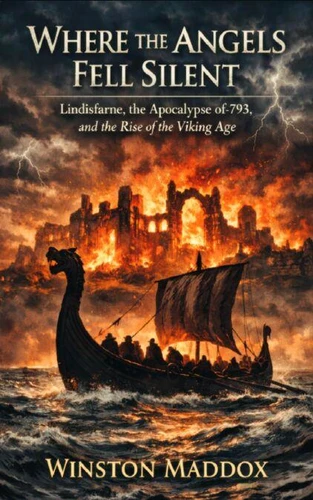
Where the Angels Fell Silent: Lindisfarne, the Apocalypse of 793, and the Rise of the Viking Age
Par :Formats :
Disponible dans votre compte client Decitre ou Furet du Nord dès validation de votre commande. Le format ePub est :
- Compatible avec une lecture sur My Vivlio (smartphone, tablette, ordinateur)
- Compatible avec une lecture sur liseuses Vivlio
- Pour les liseuses autres que Vivlio, vous devez utiliser le logiciel Adobe Digital Edition. Non compatible avec la lecture sur les liseuses Kindle, Remarkable et Sony
 , qui est-ce ?
Notre partenaire de plateforme de lecture numérique où vous retrouverez l'ensemble de vos ebooks gratuitement
Pour en savoir plus sur nos ebooks, consultez notre aide en ligne ici
C'est si simple ! Lisez votre ebook avec l'app Vivlio sur votre tablette, mobile ou ordinateur :

- FormatePub
- ISBN8235397620
- EAN9798235397620
- Date de parution22/06/2026
- Protection num.pas de protection
- Infos supplémentairesepub
- ÉditeurIoakim Ioakim
Résumé
What if the apocalypse didn't arrive with the sounding of heavenly trumpets, but with the rhythmic, low creak of foreign oars slicing through a morning fog? To the monks of Northumbria, the morning of June 8, 793, was not the start of a historical era; it was the literal undoing of God's creation. For centuries, modern histories have treated the raid on Lindisfarne as a simple, bloody footnote-a sudden burst of pagan savagery that caught a kingdom off guard.
But for the seasoned historian who demands more than superficial dates and repetitive tropes, the true story of Holy Island remains buried beneath layers of ecclesiastical panic and Victorian romanticism. In Where the Angels Fell Silent, historian Winston Maddox strips away the sanitized mythology to deliver an uncompromising, deeply researched excavation of the event that fractured Western Christendom.
This is not a passive retreading of familiar waters. Maddox plunges you directly into the complex geopolitical chessboard of eighth-century Europe, where the immense, unfortified wealth of Christian monasteries sat like a glittering target just across the North Sea. You will examine the intricate naval physics of the clinker-built longships, explore the shifting socioeconomic pressures of Scandinavia that weaponized Norse seafaring, and trace the political vulnerabilities of an Anglo-Saxon England completely blind to its own fragility.
Through immaculate attention to primary sources-from the frantic, terrified letters of Alcuin of York to the atmospheric portents scrawled in the Anglo-Saxon Chronicle-this narrative reconstructs a world of profound psychological depth. Witness the terrifying convergence of two distinct realities: a monastic community operating under the absolute certainty of divine protection, and a highly sophisticated, pragmatic maritime warrior culture driven by an insatiable need for silver and renown.
Maddox details the agonizing mechanics of the raid with clinical, visceral precision, exploring not just the blood spilled upon the stone altars, but the theological existential crisis that followed in the smoke of the priory's ruin. This work challenges the standard, easily digested "barbarian" narrative by treating both sides of the conflict with the rigorous academic gravity they deserve. It reveals how the sudden silence of Lindisfarne acted as a massive historical catalyst, permanently altering the trajectory of European warfare, economics, and royal centralization.
From the ash of Holy Island rose the foundations of unified England, forged in the fires of a defensive necessity that lasted for over two centuries. If you are a reader who demands absolute historical fidelity wedded to a narrative prose that makes the past feel dangerously alive, this book is your gateway. Are you ready to stop reading about the past, and finally step onto the blood-soaked sand where the modern world was born?
But for the seasoned historian who demands more than superficial dates and repetitive tropes, the true story of Holy Island remains buried beneath layers of ecclesiastical panic and Victorian romanticism. In Where the Angels Fell Silent, historian Winston Maddox strips away the sanitized mythology to deliver an uncompromising, deeply researched excavation of the event that fractured Western Christendom.
This is not a passive retreading of familiar waters. Maddox plunges you directly into the complex geopolitical chessboard of eighth-century Europe, where the immense, unfortified wealth of Christian monasteries sat like a glittering target just across the North Sea. You will examine the intricate naval physics of the clinker-built longships, explore the shifting socioeconomic pressures of Scandinavia that weaponized Norse seafaring, and trace the political vulnerabilities of an Anglo-Saxon England completely blind to its own fragility.
Through immaculate attention to primary sources-from the frantic, terrified letters of Alcuin of York to the atmospheric portents scrawled in the Anglo-Saxon Chronicle-this narrative reconstructs a world of profound psychological depth. Witness the terrifying convergence of two distinct realities: a monastic community operating under the absolute certainty of divine protection, and a highly sophisticated, pragmatic maritime warrior culture driven by an insatiable need for silver and renown.
Maddox details the agonizing mechanics of the raid with clinical, visceral precision, exploring not just the blood spilled upon the stone altars, but the theological existential crisis that followed in the smoke of the priory's ruin. This work challenges the standard, easily digested "barbarian" narrative by treating both sides of the conflict with the rigorous academic gravity they deserve. It reveals how the sudden silence of Lindisfarne acted as a massive historical catalyst, permanently altering the trajectory of European warfare, economics, and royal centralization.
From the ash of Holy Island rose the foundations of unified England, forged in the fires of a defensive necessity that lasted for over two centuries. If you are a reader who demands absolute historical fidelity wedded to a narrative prose that makes the past feel dangerously alive, this book is your gateway. Are you ready to stop reading about the past, and finally step onto the blood-soaked sand where the modern world was born?