Nouveauté
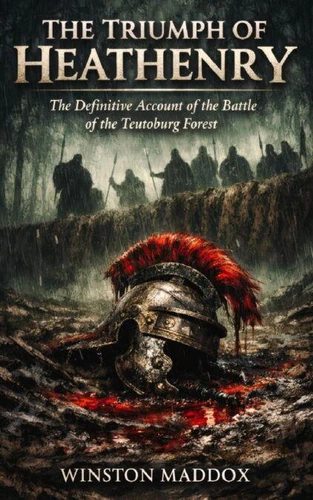
The Triumph of Heathenry: The Definitive Account of the Battle of the Teutoburg Forest
Par :Formats :
Disponible dans votre compte client Decitre ou Furet du Nord dès validation de votre commande. Le format ePub est :
- Compatible avec une lecture sur My Vivlio (smartphone, tablette, ordinateur)
- Compatible avec une lecture sur liseuses Vivlio
- Pour les liseuses autres que Vivlio, vous devez utiliser le logiciel Adobe Digital Edition. Non compatible avec la lecture sur les liseuses Kindle, Remarkable et Sony
 , qui est-ce ?
Notre partenaire de plateforme de lecture numérique où vous retrouverez l'ensemble de vos ebooks gratuitement
Pour en savoir plus sur nos ebooks, consultez notre aide en ligne ici
C'est si simple ! Lisez votre ebook avec l'app Vivlio sur votre tablette, mobile ou ordinateur :

- FormatePub
- ISBN8235009431
- EAN9798235009431
- Date de parution30/06/2026
- Protection num.pas de protection
- Infos supplémentairesepub
- ÉditeurIoakim Ioakim
Résumé
What does it feel like when the world's most disciplined military machine realizes it has marched into a fifteen-kilometer slaughterhouse? History often reduces the Battle of the Teutoburg Forest to a single static date-9 AD-and a handful of famous quotes. But for the twenty thousand Roman legionaries, auxiliary troops, and civilian camp followers who stepped into the trackless marshes of Magna Germania, it was a three-day, slow-motion descent into absolute annihilation.
In The Triumph of Heathenry: The Definitive Account of the Battle of the Teutoburg Forest, historian Winston Maddox delivers an uncompromising, blow-by-blow tactical deconstruction of history's greatest military ambush. This is a visceral, meticulously researched immersion into the mud, rain, and iron of a disaster that permanently shattered the expansionist dreams of the Roman Empire. For the seasoned military history buff, standard narratives of generic ancient combat are entirely unfulfilling.
You demand the granular mechanics of the battlefield. Maddox delivers exactly that by blending the classical accounts of Velleius Paterculus and Tacitus with the cutting-edge discoveries of modern battlefield archaeology at Kalkriese. You will experience the agonizing breakdown of the Roman column as a sudden, torrential rainstorm turns the narrow forest tracks into a swampy morass, rendering the heavy plywood shields of the legionaries waterlogged, heavy, and completely useless.
Step directly into the ranks as the first wave of Germanic javelins cuts through the canopy, systematically targeting a column stretched so thin by the treacherous terrain that it is physically impossible for the centuries to form their lethal, standard defensive squares. This book moves beyond the initial strike to investigate the terrifying endurance required to survive an asymmetrical war of attrition.
Maddox charts the agonizing second day, tracking the exhausting physical and mental collapse of elite Roman forces who are forced to fight an enemy that refuses to engage in open combat. You will explore the architectural genius behind Arminius's hidden trap: a massive, pre-built earthen turf wall designed to bottleneck the retreating legions between a steep, densely wooded hill and an impassable, treacherous bog.
Through sharp, tactical prose, you will witness the desperate, bloody failure of Rome's most seasoned cohorts as they attempt to storm these fortified tribal berms, only to be systematically cut down by defensive volleys of stones and spears. The true gravity of this account lies in its unvarnished examination of a total systemic collapse. Maddox guides readers through the final hours of the command structure, recreating the claustrophobic terror that led Governor Publius Quinctilius Varus to fall upon his own sword rather than face the altars of the tribal gods.
You will witness the chaotic dissolution of discipline as cavalry units abandon their infantry comrades, the frantic capture of the sacred golden Eagle standards, and the grim, dark rituals that took place in the aftermath within the sacred groves, where the altars ran red with the blood of sacrificed Roman officers. Every chapter is designed to bring you face-to-face with the raw, terrifying reality of ancient warfare at its most primitive and lethal.
Could your modern sensibilities survive the freezing rain and claustrophobic terror of an ancient forest closing in to erase your entire civilization? Winston Maddox provides the definitive, uncompromised autopsy of Rome's greatest military disaster, charting the precise tactical choices that permanently fixed the borders of the Western world. For the discerning historical mind that demands rigorous battlefield geometry, authentic administrative context, and a deep plunge into the brutal reality of the past, this volume stands as an unmatched testament to the day the Roman Eagle fell.
In The Triumph of Heathenry: The Definitive Account of the Battle of the Teutoburg Forest, historian Winston Maddox delivers an uncompromising, blow-by-blow tactical deconstruction of history's greatest military ambush. This is a visceral, meticulously researched immersion into the mud, rain, and iron of a disaster that permanently shattered the expansionist dreams of the Roman Empire. For the seasoned military history buff, standard narratives of generic ancient combat are entirely unfulfilling.
You demand the granular mechanics of the battlefield. Maddox delivers exactly that by blending the classical accounts of Velleius Paterculus and Tacitus with the cutting-edge discoveries of modern battlefield archaeology at Kalkriese. You will experience the agonizing breakdown of the Roman column as a sudden, torrential rainstorm turns the narrow forest tracks into a swampy morass, rendering the heavy plywood shields of the legionaries waterlogged, heavy, and completely useless.
Step directly into the ranks as the first wave of Germanic javelins cuts through the canopy, systematically targeting a column stretched so thin by the treacherous terrain that it is physically impossible for the centuries to form their lethal, standard defensive squares. This book moves beyond the initial strike to investigate the terrifying endurance required to survive an asymmetrical war of attrition.
Maddox charts the agonizing second day, tracking the exhausting physical and mental collapse of elite Roman forces who are forced to fight an enemy that refuses to engage in open combat. You will explore the architectural genius behind Arminius's hidden trap: a massive, pre-built earthen turf wall designed to bottleneck the retreating legions between a steep, densely wooded hill and an impassable, treacherous bog.
Through sharp, tactical prose, you will witness the desperate, bloody failure of Rome's most seasoned cohorts as they attempt to storm these fortified tribal berms, only to be systematically cut down by defensive volleys of stones and spears. The true gravity of this account lies in its unvarnished examination of a total systemic collapse. Maddox guides readers through the final hours of the command structure, recreating the claustrophobic terror that led Governor Publius Quinctilius Varus to fall upon his own sword rather than face the altars of the tribal gods.
You will witness the chaotic dissolution of discipline as cavalry units abandon their infantry comrades, the frantic capture of the sacred golden Eagle standards, and the grim, dark rituals that took place in the aftermath within the sacred groves, where the altars ran red with the blood of sacrificed Roman officers. Every chapter is designed to bring you face-to-face with the raw, terrifying reality of ancient warfare at its most primitive and lethal.
Could your modern sensibilities survive the freezing rain and claustrophobic terror of an ancient forest closing in to erase your entire civilization? Winston Maddox provides the definitive, uncompromised autopsy of Rome's greatest military disaster, charting the precise tactical choices that permanently fixed the borders of the Western world. For the discerning historical mind that demands rigorous battlefield geometry, authentic administrative context, and a deep plunge into the brutal reality of the past, this volume stands as an unmatched testament to the day the Roman Eagle fell.