SOLDES
Jusqu'à -70% sur une sélection d'articles*

Nouveauté
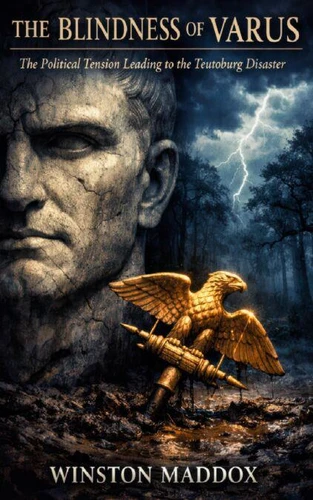
The Blindness of Varus: The Political Tension Leading to the Teutoburg Disaster
Par :Formats :
Disponible dans votre compte client Decitre ou Furet du Nord dès validation de votre commande. Le format ePub est :
- Compatible avec une lecture sur My Vivlio (smartphone, tablette, ordinateur)
- Compatible avec une lecture sur liseuses Vivlio
- Pour les liseuses autres que Vivlio, vous devez utiliser le logiciel Adobe Digital Edition. Non compatible avec la lecture sur les liseuses Kindle, Remarkable et Sony
 , qui est-ce ?
Notre partenaire de plateforme de lecture numérique où vous retrouverez l'ensemble de vos ebooks gratuitement
Pour en savoir plus sur nos ebooks, consultez notre aide en ligne ici
C'est si simple ! Lisez votre ebook avec l'app Vivlio sur votre tablette, mobile ou ordinateur :

- FormatePub
- ISBN8233938894
- EAN9798233938894
- Date de parution30/06/2026
- Protection num.pas de protection
- Infos supplémentairesepub
- ÉditeurLinda Balsamo
Résumé
What causes a flawless bureaucratic superpower to march its own destruction straight into the mud? History books are quick to paint the Teutoburg Forest as a purely tactical ambush-a sudden storm of barbarian iron out of the dark woods. But the three Roman legions that vanished in the year 9 AD were not defeated merely by spears; they were dismantled months prior by administrative arrogance, fiscal overreach, and a catastrophic intelligence failure.
In The Blindness of Varus: The Political Tension Leading to the Teutoburg Disaster, historian Winston Maddox masterfully deconstructs the structural hubris of an empire that believed a culture could be conquered simply by taxing it. This is an uncompromised, granular plunge into the volatile political ecosystem of the Augustan frontier, built specifically for those who want to feel the mounting dread of a civilization marching blindly into its greatest catastrophe.
For the seasoned history buff, casual military summaries are never enough. You demand to know the friction points of the provinces. Maddox strips away centuries of romanticized myth to expose the cold reality of Roman imperial governance under Publius Quinctilius Varus. Readers will enter the makeshift Roman courtrooms erected in the deep Germanic wilderness, witnessing the deep systemic insults of a legalistic governor who treated free, honor-bound tribesmen as submissive, taxable provincial subjects.
You will see how the introduction of Roman property laws and heavy censuses did not civilize the frontier, but rather unified ancient, blood-feuding clans against a common existential threat. This book exposes the true catalyst of the rebellion: the terrifying realization among the Germanic chieftains that Rome did not just want to defeat them in battle, but intended to thoroughly erase their culture, their laws, and their sacred spaces.
The true focus of this historical narrative is the high-stakes shadow war of espionage and psychological manipulation that occurred right inside the Roman command tents. Maddox expertly charts the dual life of Arminius as he seamlessly navigated his duties as a decorated Roman equestrian officer while secretly organizing a massive coalition of rebel chieftains in the dead of night. The text captures the agonizing, claustrophobic political tension that culminated at Varus's own dinner table, where the pro-Roman chieftain Segestes openly denounced Arminius as a traitor and laid out the exact blueprints of the impending trap.
Through rigorous analysis of classical sources, Maddox explores the profound cognitive dissonance of Varus-a man so blinded by imperial superiority and bureaucratic complacency that he dismissed the explicit warnings as mere tribal malice. This work is an immersive journey into the anatomy of an empire's blind spot. You will track the logistical nightmare of the fateful decision to march, observing how twenty thousand soldiers and thousands of civilian camp followers were slowly maneuvered off the secure imperial highway into a trackless, rain-soaked abyss.
Maddox's sharp prose ensures that you are not merely reading about the ancient past; you are standing in the freezing rain, feeling the shifting political currents, and observing the precise moment the administrative machinery of Rome cracked under the weight of its own pride. It is a masterclass in political and military history, tracing the slow-motion collapse of an imperial strategy. Can an empire's absolute faith in its own laws become the very weapon used to destroy it?
In The Blindness of Varus: The Political Tension Leading to the Teutoburg Disaster, historian Winston Maddox masterfully deconstructs the structural hubris of an empire that believed a culture could be conquered simply by taxing it. This is an uncompromised, granular plunge into the volatile political ecosystem of the Augustan frontier, built specifically for those who want to feel the mounting dread of a civilization marching blindly into its greatest catastrophe.
For the seasoned history buff, casual military summaries are never enough. You demand to know the friction points of the provinces. Maddox strips away centuries of romanticized myth to expose the cold reality of Roman imperial governance under Publius Quinctilius Varus. Readers will enter the makeshift Roman courtrooms erected in the deep Germanic wilderness, witnessing the deep systemic insults of a legalistic governor who treated free, honor-bound tribesmen as submissive, taxable provincial subjects.
You will see how the introduction of Roman property laws and heavy censuses did not civilize the frontier, but rather unified ancient, blood-feuding clans against a common existential threat. This book exposes the true catalyst of the rebellion: the terrifying realization among the Germanic chieftains that Rome did not just want to defeat them in battle, but intended to thoroughly erase their culture, their laws, and their sacred spaces.
The true focus of this historical narrative is the high-stakes shadow war of espionage and psychological manipulation that occurred right inside the Roman command tents. Maddox expertly charts the dual life of Arminius as he seamlessly navigated his duties as a decorated Roman equestrian officer while secretly organizing a massive coalition of rebel chieftains in the dead of night. The text captures the agonizing, claustrophobic political tension that culminated at Varus's own dinner table, where the pro-Roman chieftain Segestes openly denounced Arminius as a traitor and laid out the exact blueprints of the impending trap.
Through rigorous analysis of classical sources, Maddox explores the profound cognitive dissonance of Varus-a man so blinded by imperial superiority and bureaucratic complacency that he dismissed the explicit warnings as mere tribal malice. This work is an immersive journey into the anatomy of an empire's blind spot. You will track the logistical nightmare of the fateful decision to march, observing how twenty thousand soldiers and thousands of civilian camp followers were slowly maneuvered off the secure imperial highway into a trackless, rain-soaked abyss.
Maddox's sharp prose ensures that you are not merely reading about the ancient past; you are standing in the freezing rain, feeling the shifting political currents, and observing the precise moment the administrative machinery of Rome cracked under the weight of its own pride. It is a masterclass in political and military history, tracing the slow-motion collapse of an imperial strategy. Can an empire's absolute faith in its own laws become the very weapon used to destroy it?