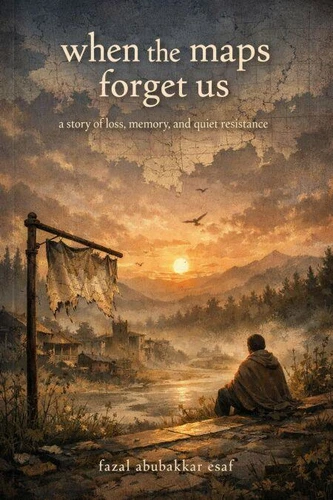
Exile does not begin at the border. It begins much earlier-in language, in memory, in the body. This book explores exile not as movement, but as condition-a way of eating, waiting, loving, raising children, and burying the dead. Each chapter stands alone, yet all of them share the same breath. They are fragments of a larger truth:that dignity survives even when territory does not. These stories do not ask for sympathy.
They ask for recognition. And perhaps, for accountability.
Exile does not begin at the border. It begins much earlier-in language, in memory, in the body. This book explores exile not as movement, but as condition-a way of eating, waiting, loving, raising children, and burying the dead. Each chapter stands alone, yet all of them share the same breath. They are fragments of a larger truth:that dignity survives even when territory does not. These stories do not ask for sympathy.
They ask for recognition. And perhaps, for accountability.


 , qui est-ce ?