Selene Rothwell is a nonfiction author known for writing thoughtful books on psychology, relationships, and emotional well-being. Her reflective style blends modern research with compassionate storytelling, helping readers navigate personal growth and life's uncertainties with greater clarity and resilience.
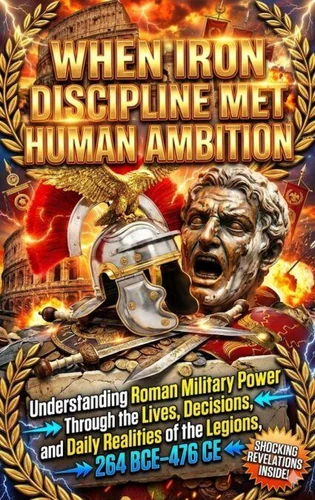
When Iron Discipline Met Human Ambition. Understanding Roman Military Power Through the Lives, Decisions, and Daily Realities of the Legions, 264 BCE–476 CE
Par :Formats :
Disponible dans votre compte client Decitre ou Furet du Nord dès validation de votre commande. Le format ePub est :
- Compatible avec une lecture sur My Vivlio (smartphone, tablette, ordinateur)
- Compatible avec une lecture sur liseuses Vivlio
- Pour les liseuses autres que Vivlio, vous devez utiliser le logiciel Adobe Digital Edition. Non compatible avec la lecture sur les liseuses Kindle, Remarkable et Sony
 , qui est-ce ?
Notre partenaire de plateforme de lecture numérique où vous retrouverez l'ensemble de vos ebooks gratuitement
Pour en savoir plus sur nos ebooks, consultez notre aide en ligne ici
C'est si simple ! Lisez votre ebook avec l'app Vivlio sur votre tablette, mobile ou ordinateur :

- Nombre de pages193
- FormatePub
- ISBN978-3-565-19860-3
- EAN9783565198603
- Date de parution27/01/2026
- Protection num.pas de protection
- Taille2 Mo
- Infos supplémentairesepub
- ÉditeurEmphaloz Publishing House
Résumé
For centuries, Rome's legions were the most feared military force in the ancient world-not because of size or technology alone, but because of something far more complex: a system that turned ordinary farmers into disciplined soldiers, transformed defeat into tactical innovation, and bound individual ambition to collective survival.
This book follows the Roman military machine from the Punic Wars through the fall of the Western Empire, examining not just famous battles but the everyday decisions that shaped conquest: how centurions maintained discipline in distant provinces, how engineers adapted siege tactics to unfamiliar terrain, how supply lines determined strategic choices, and how soldiers' letters home reveal the psychological toll of endless expansion.
Drawing on archaeological evidence, military correspondence, and ancient testimony, it traces how the legion evolved-from citizen militia to professional standing army-and what that transformation reveals about power, loyalty, and the limits of institutional control.
It explores how tactical flexibility coexisted with rigid hierarchy, how Roman commanders learned from enemies, and how the very success of the military system eventually contributed to imperial fragmentation. This is not a story of inevitable triumph, but of human ingenuity, adaptation, and the uncomfortable relationship between military efficiency and the societies it served.
It explores how tactical flexibility coexisted with rigid hierarchy, how Roman commanders learned from enemies, and how the very success of the military system eventually contributed to imperial fragmentation. This is not a story of inevitable triumph, but of human ingenuity, adaptation, and the uncomfortable relationship between military efficiency and the societies it served.