Selene Rothwell is a nonfiction author known for writing thoughtful books on psychology, relationships, and emotional well-being. Her reflective style blends modern research with compassionate storytelling, helping readers navigate personal growth and life's uncertainties with greater clarity and resilience.
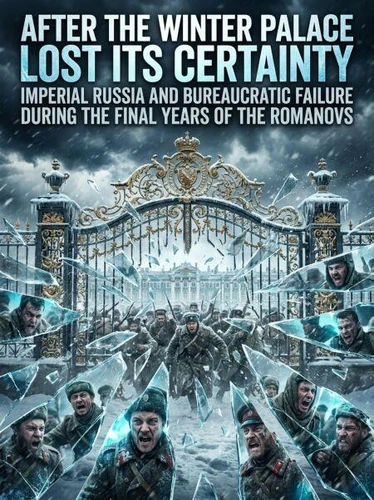
After the Winter Palace Lost Its Certainty. Imperial Russia and bureaucratic failure during the final years of the Romanovs
Par :Formats :
Disponible dans votre compte client Decitre ou Furet du Nord dès validation de votre commande. Le format ePub est :
- Compatible avec une lecture sur My Vivlio (smartphone, tablette, ordinateur)
- Compatible avec une lecture sur liseuses Vivlio
- Pour les liseuses autres que Vivlio, vous devez utiliser le logiciel Adobe Digital Edition. Non compatible avec la lecture sur les liseuses Kindle, Remarkable et Sony
 , qui est-ce ?
Notre partenaire de plateforme de lecture numérique où vous retrouverez l'ensemble de vos ebooks gratuitement
Pour en savoir plus sur nos ebooks, consultez notre aide en ligne ici
C'est si simple ! Lisez votre ebook avec l'app Vivlio sur votre tablette, mobile ou ordinateur :

- Nombre de pages222
- FormatePub
- ISBN978-3-565-48557-4
- EAN9783565485574
- Date de parution08/06/2026
- Protection num.pas de protection
- Taille1 Mo
- Infos supplémentairesepub
- ÉditeurEmphaloz Publishing House
Résumé
The Romanov Empire did not collapse in a single revolution. Long before crowds filled the streets of Petrograd, authority inside the imperial court had already begun to fracture. Ministers competed for influence, economic crises deepened public distrust, and political paralysis spread through institutions unable to govern a modern empire at war.
This book reconstructs the final years of Tsar Nicholas II through the machinery of imperial administration itself.
Drawing on court correspondence, diplomatic memoranda, and wartime records, it examines how ministerial instability weakened the state from within. The growing influence of mystical court circles surrounding the royal family further eroded confidence among officials who increasingly viewed governance as improvised and disconnected from reality. At the same time, Russia's participation in World War I exposed catastrophic failures in military logistics.
Supply shortages, transportation breakdowns, and collapsing troop morale accelerated radicalization inside military barracks. Revolutionary ideas spread not only through ideology, but through exhaustion, hunger, and administrative incompetence at every level of command. The story of the last Romanovs therefore becomes more than a dynastic tragedy. It reveals how empires often disappear gradually inside their own institutions before they fall publicly before the world.
Drawing on court correspondence, diplomatic memoranda, and wartime records, it examines how ministerial instability weakened the state from within. The growing influence of mystical court circles surrounding the royal family further eroded confidence among officials who increasingly viewed governance as improvised and disconnected from reality. At the same time, Russia's participation in World War I exposed catastrophic failures in military logistics.
Supply shortages, transportation breakdowns, and collapsing troop morale accelerated radicalization inside military barracks. Revolutionary ideas spread not only through ideology, but through exhaustion, hunger, and administrative incompetence at every level of command. The story of the last Romanovs therefore becomes more than a dynastic tragedy. It reveals how empires often disappear gradually inside their own institutions before they fall publicly before the world.