Selene Rothwell is a nonfiction author known for writing thoughtful books on psychology, relationships, and emotional well-being. Her reflective style blends modern research with compassionate storytelling, helping readers navigate personal growth and life's uncertainties with greater clarity and resilience.
Nouveauté
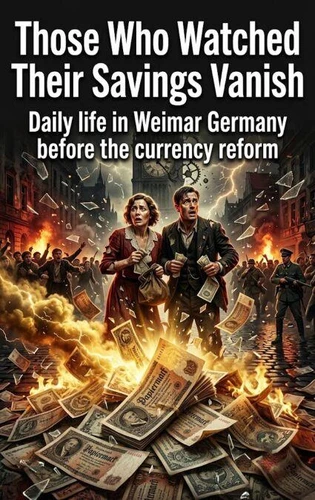
Those Who Watched Their Savings Vanish. Daily life in Weimar Germany before the currency reform
Par :Formats :
Disponible dans votre compte client Decitre ou Furet du Nord dès validation de votre commande. Le format ePub est :
- Compatible avec une lecture sur My Vivlio (smartphone, tablette, ordinateur)
- Compatible avec une lecture sur liseuses Vivlio
- Pour les liseuses autres que Vivlio, vous devez utiliser le logiciel Adobe Digital Edition. Non compatible avec la lecture sur les liseuses Kindle, Remarkable et Sony
 , qui est-ce ?
Notre partenaire de plateforme de lecture numérique où vous retrouverez l'ensemble de vos ebooks gratuitement
Pour en savoir plus sur nos ebooks, consultez notre aide en ligne ici
C'est si simple ! Lisez votre ebook avec l'app Vivlio sur votre tablette, mobile ou ordinateur :

- Nombre de pages229
- FormatePub
- ISBN978-3-565-54610-7
- EAN9783565546107
- Date de parution08/07/2026
- Protection num.pas de protection
- Taille665 Ko
- Infos supplémentairesepub
- ÉditeurEmphaloz Publishing House
Résumé
A woman carried a wheelbarrow of cash to buy bread. By the time she reached the baker, the price had doubled. This is not a metaphor. It is what happened in Germany between 1921 and 1924, when the collapse of the mark destroyed the lives of millions who had done nothing wrong. This book reconstructs the lived experience of hyperinflation through diaries, court records, and newspaper accounts. It traces how ordinary people coped with a world where money lost meaning, where contracts became traps, and where the state itself became the thief.
The focus is not on the politicians who made the decisions but on the citizens who bore the consequences. The modern reader will recognize the patterns: rising prices, eroded trust, and the slow death of the middle class.
The focus is not on the politicians who made the decisions but on the citizens who bore the consequences. The modern reader will recognize the patterns: rising prices, eroded trust, and the slow death of the middle class.