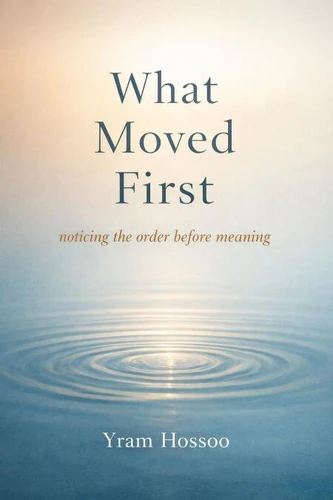
Most books explain. This one waits. What Moved First listens for the moment before belief, before interpretation, before meaning rushes in to explain what just happened. Moving through familiar biblical scenes and human moments, the book does not reinterpret scripture or replace doctrine. Instead, it stays with timing-watching how action, movement, and recognition often occur before words, reasons, or moral frameworks arrive.
There are no arguments here. No conclusions to defend. No lessons to memorize. Each chapter quietly observes what was already happening while explanations were still forming. Written for readers who sense that meaning often arrives late, What Moved First can be read slowly, listened to, or revisited in fragments. It works as a book, an audio experience, or a series of spoken reflections-without requiring agreement or belief.
Nothing here asks to be proven. It only asks to be noticed.
Most books explain. This one waits. What Moved First listens for the moment before belief, before interpretation, before meaning rushes in to explain what just happened. Moving through familiar biblical scenes and human moments, the book does not reinterpret scripture or replace doctrine. Instead, it stays with timing-watching how action, movement, and recognition often occur before words, reasons, or moral frameworks arrive.
There are no arguments here. No conclusions to defend. No lessons to memorize. Each chapter quietly observes what was already happening while explanations were still forming. Written for readers who sense that meaning often arrives late, What Moved First can be read slowly, listened to, or revisited in fragments. It works as a book, an audio experience, or a series of spoken reflections-without requiring agreement or belief.
Nothing here asks to be proven. It only asks to be noticed.


 , qui est-ce ?