SOLDES
Jusqu'à -70% sur une sélection d'articles*

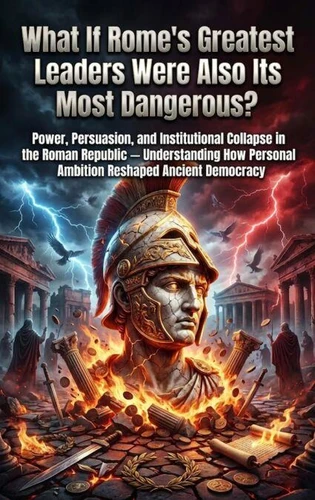
What If Rome's Greatest Leaders Were Also Its Most Dangerous?. Power, Persuasion, and Institutional Collapse in the Roman Republic — Understanding How Personal Ambition Reshaped Ancient Democracy
Par :Formats :
Disponible dans votre compte client Decitre ou Furet du Nord dès validation de votre commande. Le format ePub est :
- Compatible avec une lecture sur My Vivlio (smartphone, tablette, ordinateur)
- Compatible avec une lecture sur liseuses Vivlio
- Pour les liseuses autres que Vivlio, vous devez utiliser le logiciel Adobe Digital Edition. Non compatible avec la lecture sur les liseuses Kindle, Remarkable et Sony
 , qui est-ce ?
Notre partenaire de plateforme de lecture numérique où vous retrouverez l'ensemble de vos ebooks gratuitement
Pour en savoir plus sur nos ebooks, consultez notre aide en ligne ici
C'est si simple ! Lisez votre ebook avec l'app Vivlio sur votre tablette, mobile ou ordinateur :

- Nombre de pages228
- FormatePub
- ISBN978-3-565-20303-1
- EAN9783565203031
- Date de parution28/01/2026
- Protection num.pas de protection
- Taille2 Mo
- Infos supplémentairesepub
- ÉditeurEmphaloz Publishing House
Résumé
Rome's Republic promised citizen participation and balanced power. Yet the very leaders celebrated for military genius and political reform-Julius Caesar, Pompey, Sulla-also dismantled the institutions meant to restrain them. How did generals become dictators? How did personal loyalty replace civic duty? And why did the Senate repeatedly fail to prevent its own obsolescence?
This book traces Rome's constitutional crisis through the careers of its most charismatic figures, examining primary sources-speeches, letters, Senate debates-to reveal the mechanisms of institutional erosion.
It follows the rise of populares vs. optimates factionalism, the weaponization of mob violence, the militarization of political competition, and the slow transformation of republican norms into imperial autocracy. From the Gracchi brothers' land reforms to Caesar's crossing of the Rubicon, from Cicero's desperate defense of the Republic to Augustus's careful construction of monarchy disguised as tradition, this is the story of how personal charisma, emergency powers, and civic complacency conspired to end 500 years of republican government.
It asks: what does Rome's collapse reveal about the fragility of democratic institutions anywhere?
It follows the rise of populares vs. optimates factionalism, the weaponization of mob violence, the militarization of political competition, and the slow transformation of republican norms into imperial autocracy. From the Gracchi brothers' land reforms to Caesar's crossing of the Rubicon, from Cicero's desperate defense of the Republic to Augustus's careful construction of monarchy disguised as tradition, this is the story of how personal charisma, emergency powers, and civic complacency conspired to end 500 years of republican government.
It asks: what does Rome's collapse reveal about the fragility of democratic institutions anywhere?
A propos de Selene Rothwell










8,49 €