When something goes wrong, the first response is often to push harder, add another process, or reach for the solution that worked last time. Sometimes that helps. Often it makes the problem more expensive. Well, That Didn't Work is a practical guide to diagnosing a wrong turn before committing to another one. Its central framework, Hang On, helps you pause, identify what kind of problem you are actually facing, and choose a better handhold for the next move.
The book explores recurring traps such as solving the wrong problem, mistaking symptoms for causes, relying on assumptions that no longer hold, and continuing with a method simply because time has already been invested in it. It provides useful questions, examples and small exercises for problems at work, in projects, in teams and in everyday life. This is not a promise that every problem has a neat answer.
It is a way to become more deliberate when the obvious approach has failed. You do not need to be a specialist. You need enough clarity to stop repeating the same move and choose a more useful one.
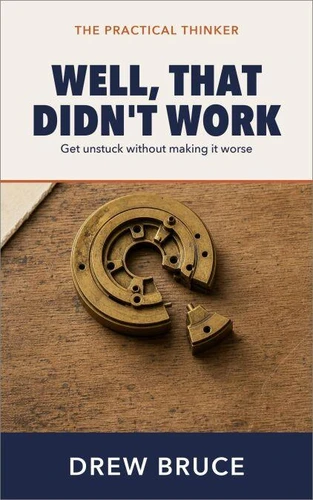
When something goes wrong, the first response is often to push harder, add another process, or reach for the solution that worked last time. Sometimes that helps. Often it makes the problem more expensive. Well, That Didn't Work is a practical guide to diagnosing a wrong turn before committing to another one. Its central framework, Hang On, helps you pause, identify what kind of problem you are actually facing, and choose a better handhold for the next move.
The book explores recurring traps such as solving the wrong problem, mistaking symptoms for causes, relying on assumptions that no longer hold, and continuing with a method simply because time has already been invested in it. It provides useful questions, examples and small exercises for problems at work, in projects, in teams and in everyday life. This is not a promise that every problem has a neat answer.
It is a way to become more deliberate when the obvious approach has failed. You do not need to be a specialist. You need enough clarity to stop repeating the same move and choose a more useful one.

 , qui est-ce ?