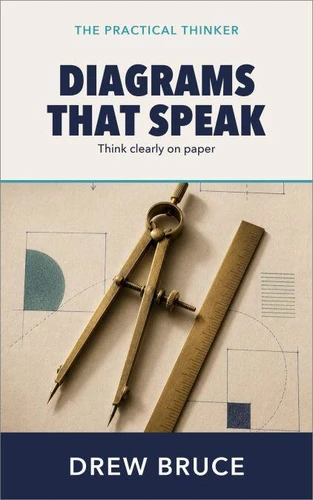
Most of us are expected to explain complex ideas without ever being taught how to make them visible. The result is usually another crowded slide, an unreadable process map, or a diagram that creates more questions than it answers. Diagrams That Speak is a practical guide to turning tangled information into clear, useful visuals. You will learn how people actually read diagrams, which design principles do the most work, and how to choose a visual structure that matches what your audience needs to understand.
At the centre of the book are the Five Visual Questions: What exists? How does it work? How is it organised? How do things compare? What changes over time? These questions give you a reliable starting point whether you are explaining a system, presenting an idea, planning a project, teaching a concept, or making a decision visible. You do not need specialist software or a design background. You need a small set of practical habits, patterns and questions that help your diagrams say what you mean.
With worked examples, exercises and fixes for common mistakes, this book will help you create visuals that people can understand and act on.
Most of us are expected to explain complex ideas without ever being taught how to make them visible. The result is usually another crowded slide, an unreadable process map, or a diagram that creates more questions than it answers. Diagrams That Speak is a practical guide to turning tangled information into clear, useful visuals. You will learn how people actually read diagrams, which design principles do the most work, and how to choose a visual structure that matches what your audience needs to understand.
At the centre of the book are the Five Visual Questions: What exists? How does it work? How is it organised? How do things compare? What changes over time? These questions give you a reliable starting point whether you are explaining a system, presenting an idea, planning a project, teaching a concept, or making a decision visible. You do not need specialist software or a design background. You need a small set of practical habits, patterns and questions that help your diagrams say what you mean.
With worked examples, exercises and fixes for common mistakes, this book will help you create visuals that people can understand and act on.


 , qui est-ce ?