Charlotte Hayes is an English-language author who writes about psychology, emotional resilience, and personal growth. Her books combine reflective storytelling with thoughtful insights into relationships, self-awareness, and navigating change in modern life. Her writing style is warm, elegant, and accessible, encouraging readers to approach life with greater clarity, balance, and compassion.
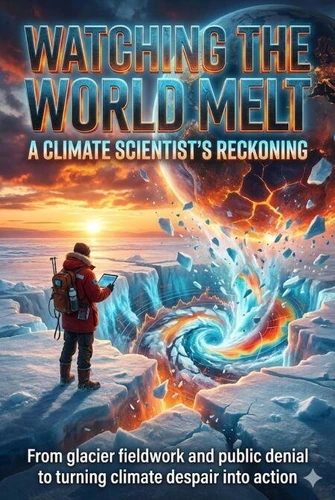
Watching the World Melt: A Climate Scientist's Reckoning. From glacier fieldwork and public denial to turning climate despair into action
Par :Formats :
Disponible dans votre compte client Decitre ou Furet du Nord dès validation de votre commande. Le format ePub est :
- Compatible avec une lecture sur My Vivlio (smartphone, tablette, ordinateur)
- Compatible avec une lecture sur liseuses Vivlio
- Pour les liseuses autres que Vivlio, vous devez utiliser le logiciel Adobe Digital Edition. Non compatible avec la lecture sur les liseuses Kindle, Remarkable et Sony
 , qui est-ce ?
Notre partenaire de plateforme de lecture numérique où vous retrouverez l'ensemble de vos ebooks gratuitement
Pour en savoir plus sur nos ebooks, consultez notre aide en ligne ici
C'est si simple ! Lisez votre ebook avec l'app Vivlio sur votre tablette, mobile ou ordinateur :

- Nombre de pages219
- FormatePub
- ISBN978-3-565-13465-6
- EAN9783565134656
- Date de parution18/12/2025
- Protection num.pas de protection
- Taille358 Ko
- Infos supplémentairesepub
- ÉditeurEmphaloz Publishing House
Résumé
On a wind-scoured glacier in Greenland, she drilled into ice older than human history and heard it crack like a warning. Back home in Britain, a TV pundit called her life's work "alarmism." Between those two sounds-the fracture of ancient ice and the laughter of denial-her world began to split.
This memoir follows a British climate scientist from her first field seasons on melting glaciers to the frontlines of the culture war over climate reality.
In remote camps and mountain observatories, she measured retreating ice, shifting snowlines, and warming oceans with a precision that left no doubt. Yet each new dataset was met by politicians delaying, journalists both-sidesing, and relatives who changed the subject at dinner. The more certain the science became, the more surreal the public conversation felt. Caught between empirical clarity and social denial, she slid into solastalgia-the homesickness for a world disappearing while you still live in it.
She describes panic attacks in conference hotels, numbness in the face of catastrophic graphs, the guilt of frequent flying for research, and the quiet despair of publishing papers that change nothing. But she also documents the slow, messy, very human process of transforming that grief into agency. Refusing to retreat into the lab, she learns to speak beyond journals and peer review: facing hostile talk-show hosts, briefing skeptical MPs, marching with youth activists who quote her work, and helping create community groups that turn abstract data into local action.
Along the way, she redefines what it means to be a scientist in a burning world-not a neutral observer, but a witness with responsibilities. For readers wrestling with eco-anxiety, students considering climate careers, policymakers who rely on scientific advice, and anyone struggling to move from dread to doing, this memoir offers both unsparing honesty and a hard-won map from paralysis to purpose.
In remote camps and mountain observatories, she measured retreating ice, shifting snowlines, and warming oceans with a precision that left no doubt. Yet each new dataset was met by politicians delaying, journalists both-sidesing, and relatives who changed the subject at dinner. The more certain the science became, the more surreal the public conversation felt. Caught between empirical clarity and social denial, she slid into solastalgia-the homesickness for a world disappearing while you still live in it.
She describes panic attacks in conference hotels, numbness in the face of catastrophic graphs, the guilt of frequent flying for research, and the quiet despair of publishing papers that change nothing. But she also documents the slow, messy, very human process of transforming that grief into agency. Refusing to retreat into the lab, she learns to speak beyond journals and peer review: facing hostile talk-show hosts, briefing skeptical MPs, marching with youth activists who quote her work, and helping create community groups that turn abstract data into local action.
Along the way, she redefines what it means to be a scientist in a burning world-not a neutral observer, but a witness with responsibilities. For readers wrestling with eco-anxiety, students considering climate careers, policymakers who rely on scientific advice, and anyone struggling to move from dread to doing, this memoir offers both unsparing honesty and a hard-won map from paralysis to purpose.