Charlotte Hayes is an English-language author who writes about psychology, emotional resilience, and personal growth. Her books combine reflective storytelling with thoughtful insights into relationships, self-awareness, and navigating change in modern life. Her writing style is warm, elegant, and accessible, encouraging readers to approach life with greater clarity, balance, and compassion.
Nouveauté
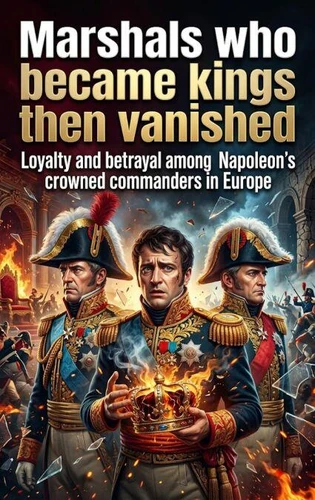
Marshals who became kings then vanished. Loyalty and betrayal among Napoleon's crowned commanders in Europe
Par :Formats :
Disponible dans votre compte client Decitre ou Furet du Nord dès validation de votre commande. Le format ePub est :
- Compatible avec une lecture sur My Vivlio (smartphone, tablette, ordinateur)
- Compatible avec une lecture sur liseuses Vivlio
- Pour les liseuses autres que Vivlio, vous devez utiliser le logiciel Adobe Digital Edition. Non compatible avec la lecture sur les liseuses Kindle, Remarkable et Sony
 , qui est-ce ?
Notre partenaire de plateforme de lecture numérique où vous retrouverez l'ensemble de vos ebooks gratuitement
Pour en savoir plus sur nos ebooks, consultez notre aide en ligne ici
C'est si simple ! Lisez votre ebook avec l'app Vivlio sur votre tablette, mobile ou ordinateur :

- Nombre de pages139
- FormatePub
- ISBN978-3-565-54568-1
- EAN9783565545681
- Date de parution08/07/2026
- Protection num.pas de protection
- Taille635 Ko
- Infos supplémentairesepub
- ÉditeurEmphaloz Publishing House
Résumé
They were the men who made empire possible-and who bore its collapse. Between 1805 and 1815, Napoleon's marshals commanded armies across Europe, governed conquered cities, and managed the machinery of continental war. But their loyalty was never simple. Some rose from revolutionary poverty to princely wealth. Others watched their families starve while serving a emperor who measured devotion in casualties.
This book examines the officer class that translated Napoleon's will into action, tracing how patronage, fear, and ambition held the system together until Leipzig and Waterloo broke it. Through their letters, court-martial records, and postwar memoirs, a different Napoleonic Wars emerges-one fought not only against foreign armies but within a military aristocracy built on borrowed time. The same men who marched to Moscow also negotiated surrenders, suppressed revolts, and faced execution by their own troops.
Their stories reveal the human architecture of Napoleonic power: what it demanded, what it promised, and what it left behind when the empire ended.
This book examines the officer class that translated Napoleon's will into action, tracing how patronage, fear, and ambition held the system together until Leipzig and Waterloo broke it. Through their letters, court-martial records, and postwar memoirs, a different Napoleonic Wars emerges-one fought not only against foreign armies but within a military aristocracy built on borrowed time. The same men who marched to Moscow also negotiated surrenders, suppressed revolts, and faced execution by their own troops.
Their stories reveal the human architecture of Napoleonic power: what it demanded, what it promised, and what it left behind when the empire ended.