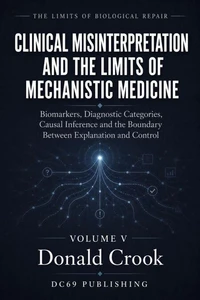
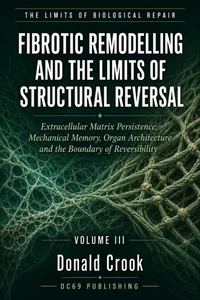
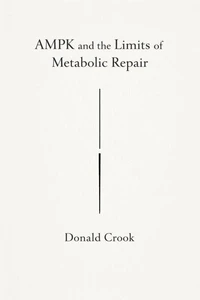
Why do immune responses sometimes fail to end?The immune system is designed to activate, contain threats, and then resolve. But in chronic inflammatory conditions, autoimmune disease, and post-infectious syndromes, the response persists long after the initiating event has passed. Symptoms continue. Inflammation lingers. Recovery stalls. This volume examines why. Immune Persistence and the Limits of Inflammatory Resolution applies the conceptual framework established in Volume I-AMPK and the Limits of Metabolic Repair-to the immune system.
It introduces immune priority as a distinct biological hierarchy capable of reorganising metabolism, behaviour, and tissue maintenance in response to threat. This book distinguishes: Continuing infection from persistent antigen Viable reservoirs from retained non-viable material Sterile danger signalling from active pathogen replication Immune suppression from inflammatory resolution Immune exhaustion from successful termination Dynamic persistence from established structural limitation The volume examines: Why resolution is an active programme, not passive decay How immune authority can outlive the emergency that triggered it How mitochondrial damage can become a sterile danger signal How innate immunity can retain altered memory of past threats Why the phagolysosomal bottleneck prevents terminal disposal Why exhaustion is not resolution How post-infectious syndromes are convergence states When immune persistence becomes structural constraint Clinical anchors include: Long COVID and PASC Post-infectious ME/CFS Post-treatment Lyme disease syndrome Rheumatoid arthritis Systemic lupus erythematosus Post-sepsis immune dysfunction Fourteen competing models of immune persistence are distinguished-ranging from active infection to trained immunity to established tissue injury-with explicit recognition that similar phenotypes can arise from different causal architectures, and different architectures can coexist in the same individual.
This volume does not offer a treatment protocol, timeline, or optimisation strategy. It does not claim that understanding a mechanism confers the ability to control it. It provides a framework for distinguishing mechanisms, delimiting inference, and preserving uncertainty where evidence is incomplete. Analytical rather than prescriptive. Explanatory rather than instructional. About the Series:The Limits of Biological Repair examines why biological processes may initiate appropriately yet fail to complete.
Volume I established the conceptual framework through metabolic signalling, autophagy, and lysosomal function. Volume II applies that framework to immunity, immune persistence, and inflammatory resolution. Volume III will examine fibrotic remodelling and structural reversal.
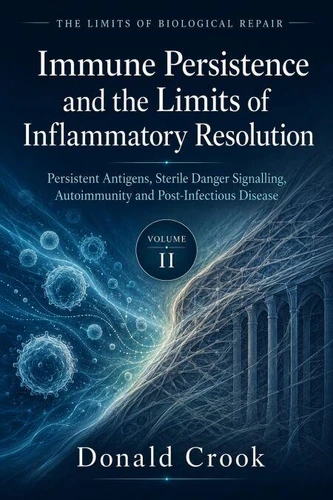
Why do immune responses sometimes fail to end?The immune system is designed to activate, contain threats, and then resolve. But in chronic inflammatory conditions, autoimmune disease, and post-infectious syndromes, the response persists long after the initiating event has passed. Symptoms continue. Inflammation lingers. Recovery stalls. This volume examines why. Immune Persistence and the Limits of Inflammatory Resolution applies the conceptual framework established in Volume I-AMPK and the Limits of Metabolic Repair-to the immune system.
It introduces immune priority as a distinct biological hierarchy capable of reorganising metabolism, behaviour, and tissue maintenance in response to threat. This book distinguishes: Continuing infection from persistent antigen Viable reservoirs from retained non-viable material Sterile danger signalling from active pathogen replication Immune suppression from inflammatory resolution Immune exhaustion from successful termination Dynamic persistence from established structural limitation The volume examines: Why resolution is an active programme, not passive decay How immune authority can outlive the emergency that triggered it How mitochondrial damage can become a sterile danger signal How innate immunity can retain altered memory of past threats Why the phagolysosomal bottleneck prevents terminal disposal Why exhaustion is not resolution How post-infectious syndromes are convergence states When immune persistence becomes structural constraint Clinical anchors include: Long COVID and PASC Post-infectious ME/CFS Post-treatment Lyme disease syndrome Rheumatoid arthritis Systemic lupus erythematosus Post-sepsis immune dysfunction Fourteen competing models of immune persistence are distinguished-ranging from active infection to trained immunity to established tissue injury-with explicit recognition that similar phenotypes can arise from different causal architectures, and different architectures can coexist in the same individual.
This volume does not offer a treatment protocol, timeline, or optimisation strategy. It does not claim that understanding a mechanism confers the ability to control it. It provides a framework for distinguishing mechanisms, delimiting inference, and preserving uncertainty where evidence is incomplete. Analytical rather than prescriptive. Explanatory rather than instructional. About the Series:The Limits of Biological Repair examines why biological processes may initiate appropriately yet fail to complete.
Volume I established the conceptual framework through metabolic signalling, autophagy, and lysosomal function. Volume II applies that framework to immunity, immune persistence, and inflammatory resolution. Volume III will examine fibrotic remodelling and structural reversal.

 , qui est-ce ?