Nouveauté
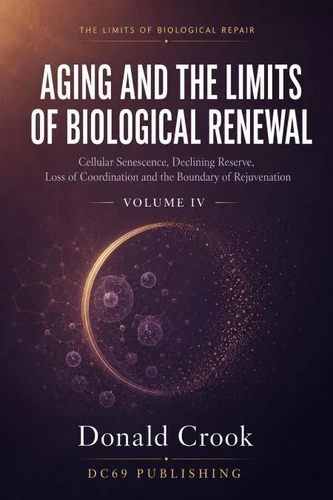
Aging and the Limits of Biological Renewal
Par :Formats :
Disponible dans votre compte client Decitre ou Furet du Nord dès validation de votre commande. Le format ePub est :
- Compatible avec une lecture sur My Vivlio (smartphone, tablette, ordinateur)
- Compatible avec une lecture sur liseuses Vivlio
- Pour les liseuses autres que Vivlio, vous devez utiliser le logiciel Adobe Digital Edition. Non compatible avec la lecture sur les liseuses Kindle, Remarkable et Sony
 , qui est-ce ?
Notre partenaire de plateforme de lecture numérique où vous retrouverez l'ensemble de vos ebooks gratuitement
Pour en savoir plus sur nos ebooks, consultez notre aide en ligne ici
C'est si simple ! Lisez votre ebook avec l'app Vivlio sur votre tablette, mobile ou ordinateur :

- FormatePub
- ISBN8235593145
- EAN9798235593145
- Date de parution31/07/2026
- Protection num.pas de protection
- Infos supplémentairesepub
- ÉditeurIoakim Ioakim
Résumé
What happens when the body continues to survive, but its capacity to renew becomes progressively less complete?Aging and the Limits of Biological Renewal examines aging not as a single disease, pathway or biological clock, but as the cumulative narrowing of the body's ability to return after disturbance. Building on the first three volumes in The Limits of Biological Repair, this book brings together incomplete cellular maintenance, unresolved immune activity and persistent structural remodelling.
It shows how these processes can accumulate across time, reducing molecular integrity, cellular identity, regenerative capacity, tissue architecture, vascular support and functional reserve. The central distinction is simple but essential:Continued survival is not the same biological event as continued renewal. The book examines how repeated cycles of stress, response and partial recovery can leave retained consequences.
A tissue may recover enough to preserve function while returning with less reserve, altered structure or reduced tolerance for the next disturbance. Apparent stability may therefore reflect compensation rather than restoration. Topics include:. chronological age versus biological state;. declining autophagy, proteostasis and mitochondrial quality control;. cellular senescence as a context-dependent state rather than a universal cause;.
stem-cell exhaustion and deterioration of regenerative niches;. epigenetic drift, cellular identity and partial reprogramming;. immune aging as simultaneous loss of effectiveness and persistence of inflammatory activity;. vascular aging, impaired perfusion and capillary loss;. declining metabolic flexibility and loss of systemic coordination;. frailty, sarcopenia, delayed wound healing, chronic kidney disease, heart failure, neurodegeneration and multimorbidity;.
the difference between biomarker improvement, compensation, repair, regeneration and genuine systemic renewal. The volume also examines the limits of rejuvenation claims. A younger molecular measurement does not necessarily indicate a younger tissue. Improved cellular function does not prove restoration of organ architecture. Increased performance may conceal reduced reserve, while mechanisms associated with aging may also serve protective roles in tumour suppression, wound containment and cellular restraint.
Throughout, the analysis maintains a strict distinction between evidence at the molecular, cellular, tissue, organ and clinical levels. Findings at one level cannot automatically be transferred to another. This is an analytical work rather than a treatment manual. It does not prescribe anti-aging protocols, claim that senescent cells are universally harmful or suggest that manipulating a single pathway can restore youth.
Volume IV completes the biological progression of the series:maintenance ? resolution ? structure ? renewalIt prepares the way for Volume V, which will examine how biomarkers, diagnoses, mechanisms and treatment responses can be mistaken for proof that complex biological systems have been explained or controlled. Not every change is damage. Not every adaptation is renewal. Not every younger measurement is a younger system.
It shows how these processes can accumulate across time, reducing molecular integrity, cellular identity, regenerative capacity, tissue architecture, vascular support and functional reserve. The central distinction is simple but essential:Continued survival is not the same biological event as continued renewal. The book examines how repeated cycles of stress, response and partial recovery can leave retained consequences.
A tissue may recover enough to preserve function while returning with less reserve, altered structure or reduced tolerance for the next disturbance. Apparent stability may therefore reflect compensation rather than restoration. Topics include:. chronological age versus biological state;. declining autophagy, proteostasis and mitochondrial quality control;. cellular senescence as a context-dependent state rather than a universal cause;.
stem-cell exhaustion and deterioration of regenerative niches;. epigenetic drift, cellular identity and partial reprogramming;. immune aging as simultaneous loss of effectiveness and persistence of inflammatory activity;. vascular aging, impaired perfusion and capillary loss;. declining metabolic flexibility and loss of systemic coordination;. frailty, sarcopenia, delayed wound healing, chronic kidney disease, heart failure, neurodegeneration and multimorbidity;.
the difference between biomarker improvement, compensation, repair, regeneration and genuine systemic renewal. The volume also examines the limits of rejuvenation claims. A younger molecular measurement does not necessarily indicate a younger tissue. Improved cellular function does not prove restoration of organ architecture. Increased performance may conceal reduced reserve, while mechanisms associated with aging may also serve protective roles in tumour suppression, wound containment and cellular restraint.
Throughout, the analysis maintains a strict distinction between evidence at the molecular, cellular, tissue, organ and clinical levels. Findings at one level cannot automatically be transferred to another. This is an analytical work rather than a treatment manual. It does not prescribe anti-aging protocols, claim that senescent cells are universally harmful or suggest that manipulating a single pathway can restore youth.
Volume IV completes the biological progression of the series:maintenance ? resolution ? structure ? renewalIt prepares the way for Volume V, which will examine how biomarkers, diagnoses, mechanisms and treatment responses can be mistaken for proof that complex biological systems have been explained or controlled. Not every change is damage. Not every adaptation is renewal. Not every younger measurement is a younger system.