Sofia Lane is a nonfiction author known for writing thoughtful books on emotional resilience, self-growth, modern relationships, and finding meaning in everyday life. Her calm and reflective writing style combines psychology, philosophy, and practical insight to help readers navigate life with greater clarity, balance, and self-awareness.
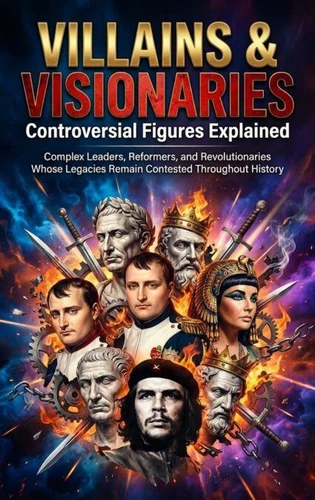
Villains & Visionaries: Controversial Figures Explained. Complex Leaders, Reformers, and Revolutionaries Whose Legacies Remain Contested Throughout History
Par :Formats :
Disponible dans votre compte client Decitre ou Furet du Nord dès validation de votre commande. Le format ePub est :
- Compatible avec une lecture sur My Vivlio (smartphone, tablette, ordinateur)
- Compatible avec une lecture sur liseuses Vivlio
- Pour les liseuses autres que Vivlio, vous devez utiliser le logiciel Adobe Digital Edition. Non compatible avec la lecture sur les liseuses Kindle, Remarkable et Sony
 , qui est-ce ?
Notre partenaire de plateforme de lecture numérique où vous retrouverez l'ensemble de vos ebooks gratuitement
Pour en savoir plus sur nos ebooks, consultez notre aide en ligne ici
C'est si simple ! Lisez votre ebook avec l'app Vivlio sur votre tablette, mobile ou ordinateur :

- Nombre de pages197
- FormatePub
- ISBN978-3-565-24971-8
- EAN9783565249718
- Date de parution15/02/2026
- Protection num.pas de protection
- Taille2 Mo
- Infos supplémentairesepub
- ÉditeurEmphaloz Publishing House
Résumé
Historical figures who transformed their societies often defy simple moral categorization, combining progressive achievements with oppressive actions, visionary reforms with brutal methods, and personal integrity with political ruthlessness. This comprehensive examination analyzes controversial leaders across history-from ancient reformers and revolutionary figures to colonial administrators and independence leaders-exploring how their decisions shaped nations while examining the ethical complexities their legacies present.
Drawing on biographical records, policy documents, contemporary accounts, and scholarly reassessments, this book reveals how these figures operated within specific historical constraints while making choices that had lasting consequences.
It explores how leaders balanced competing interests, how their stated ideals conflicted with their methods, and how their actions affected different populations unequally. The narrative examines how propaganda shaped contemporary reputations and how later generations reassess controversial figures based on evolving ethical standards. Each profile analyzes the political context that enabled their rise, the institutions they built or destroyed, the opposition they faced, and what their careers reveal about power, reform, and historical change.
It addresses why societies celebrate some controversial figures while condemning others, how nationalist narratives shape historical memory, and the difference between understanding historical actors and justifying their actions. Without moral relativism or presentism, this work provides rigorous analysis of how complex individuals navigate historical crises.
It explores how leaders balanced competing interests, how their stated ideals conflicted with their methods, and how their actions affected different populations unequally. The narrative examines how propaganda shaped contemporary reputations and how later generations reassess controversial figures based on evolving ethical standards. Each profile analyzes the political context that enabled their rise, the institutions they built or destroyed, the opposition they faced, and what their careers reveal about power, reform, and historical change.
It addresses why societies celebrate some controversial figures while condemning others, how nationalist narratives shape historical memory, and the difference between understanding historical actors and justifying their actions. Without moral relativism or presentism, this work provides rigorous analysis of how complex individuals navigate historical crises.
A propos de Sofia Lane

4,49 €