Mark Carl is an English-language nonfiction author known for writing about technology, society, and global trends. His work explores how innovation, media, and economic change influence the way people live and interact in the modern world. His writing style is direct, analytical, and highly accessible, blending research-driven insights with engaging real-world examples.
Nouveauté
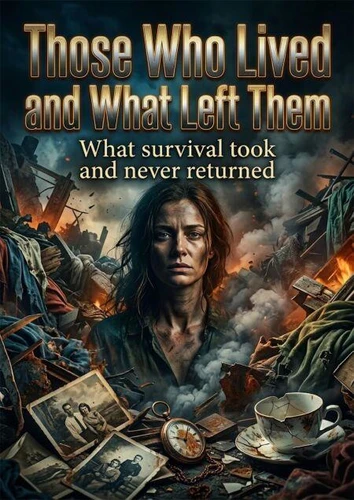
Those Who Lived and What Left Them. What survival took and never returned
Par :Formats :
Disponible dans votre compte client Decitre ou Furet du Nord dès validation de votre commande. Le format ePub est :
- Compatible avec une lecture sur My Vivlio (smartphone, tablette, ordinateur)
- Compatible avec une lecture sur liseuses Vivlio
- Pour les liseuses autres que Vivlio, vous devez utiliser le logiciel Adobe Digital Edition. Non compatible avec la lecture sur les liseuses Kindle, Remarkable et Sony
 , qui est-ce ?
Notre partenaire de plateforme de lecture numérique où vous retrouverez l'ensemble de vos ebooks gratuitement
Pour en savoir plus sur nos ebooks, consultez notre aide en ligne ici
C'est si simple ! Lisez votre ebook avec l'app Vivlio sur votre tablette, mobile ou ordinateur :

- Nombre de pages168
- FormatePub
- ISBN978-3-565-59230-2
- EAN9783565592302
- Date de parution27/07/2026
- Protection num.pas de protection
- Taille1 Mo
- Infos supplémentairesepub
- ÉditeurEmphaloz Publishing House
Résumé
For millennia, debt has been more than an economic arrangement-it has been a mechanism that determines who works, who obeys, and who is free. This book traces that thread from the clay tablets of Sumer, where unpaid loans led to the sale of family members into servitude, to the debtors' prisons of Victorian England and the modern credit systems that quietly restructure daily life. It shows how the legal frameworks around borrowing and default were never neutral: they were designed by creditors to protect property, enforce labor, and maintain hierarchy.
The shift from physical bondage to financial obligation did not eliminate coercion but refined it. Across Roman latifundia, medieval Jewish moneylending restrictions, colonial chattel slavery justified by unpaid debts, and twentieth-century consumer credit expansion, the same logic appears-debt binds those without capital to those who hold it. The book argues that debt's history is not a story of progress but of adaptation.
Each era found its own language for the same relationship: one person's default becomes another's lifelong obligation. For readers who understand that modern finance did not invent control, only new ways to dress it.
The shift from physical bondage to financial obligation did not eliminate coercion but refined it. Across Roman latifundia, medieval Jewish moneylending restrictions, colonial chattel slavery justified by unpaid debts, and twentieth-century consumer credit expansion, the same logic appears-debt binds those without capital to those who hold it. The book argues that debt's history is not a story of progress but of adaptation.
Each era found its own language for the same relationship: one person's default becomes another's lifelong obligation. For readers who understand that modern finance did not invent control, only new ways to dress it.