Mark Carl is an English-language nonfiction author known for writing about technology, society, and global trends. His work explores how innovation, media, and economic change influence the way people live and interact in the modern world. His writing style is direct, analytical, and highly accessible, blending research-driven insights with engaging real-world examples.
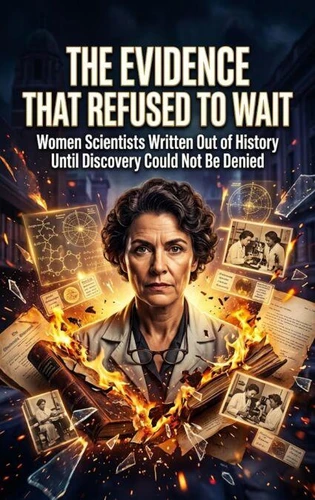
The Evidence That Refused to Wait. Women Scientists Written Out of History Until Discovery Could Not Be Denied
Par :Formats :
Disponible dans votre compte client Decitre ou Furet du Nord dès validation de votre commande. Le format ePub est :
- Compatible avec une lecture sur My Vivlio (smartphone, tablette, ordinateur)
- Compatible avec une lecture sur liseuses Vivlio
- Pour les liseuses autres que Vivlio, vous devez utiliser le logiciel Adobe Digital Edition. Non compatible avec la lecture sur les liseuses Kindle, Remarkable et Sony
 , qui est-ce ?
Notre partenaire de plateforme de lecture numérique où vous retrouverez l'ensemble de vos ebooks gratuitement
Pour en savoir plus sur nos ebooks, consultez notre aide en ligne ici
C'est si simple ! Lisez votre ebook avec l'app Vivlio sur votre tablette, mobile ou ordinateur :

- Nombre de pages167
- FormatePub
- ISBN978-3-565-46481-4
- EAN9783565464814
- Date de parution28/05/2026
- Protection num.pas de protection
- Taille2 Mo
- Infos supplémentairesepub
- ÉditeurEmphaloz Publishing House
Résumé
This book retraces the story of American science through the women whose work was erased, minimized, or credited to male colleagues until the data itself became impossible to ignore. It asks how laboratories, journals, and prize committees turned brilliant women into footnotes, and what happens when the very evidence of their discoveries forces a reluctant canon to rewrite itself.
The narrative focuses on three overlapping mechanisms: the institutional "camouflage" that hid women's contributions under anonymity, joint-authorship norms, and domestic-labor assumptions; the delayed recognition of figures such as Rosalind Franklin, Jocelyn Bell Burnell, and Chien-Shiung Wu, whose breakthroughs were only fully acknowledged once male peers could no longer contain or dismiss the evidence; and the ongoing struggle to embed these women into textbooks, monuments, and teaching materials that once excluded them.
Drawing on archival letters, marginal notes in lab books, and recent corrective biographies, the book shows how the Matilda effect-the systematic downgrading of women's scientific credit-shaped not only individual lives but entire fields.
Drawing on archival letters, marginal notes in lab books, and recent corrective biographies, the book shows how the Matilda effect-the systematic downgrading of women's scientific credit-shaped not only individual lives but entire fields.