SOLDES
Jusqu'à -70% sur une sélection d'articles*

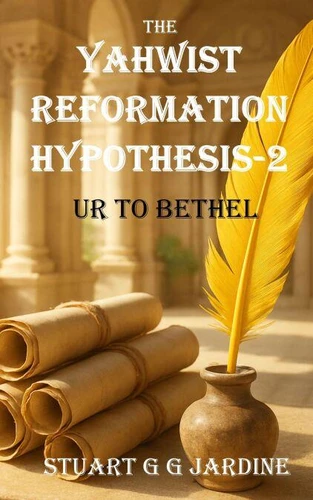
The Yahwist Reformation Hypothesis-2 Ur to Bethel. The Yahwist Reformation Hypothesis, #2
Par :Formats :
Disponible dans votre compte client Decitre ou Furet du Nord dès validation de votre commande. Le format ePub est :
- Compatible avec une lecture sur My Vivlio (smartphone, tablette, ordinateur)
- Compatible avec une lecture sur liseuses Vivlio
- Pour les liseuses autres que Vivlio, vous devez utiliser le logiciel Adobe Digital Edition. Non compatible avec la lecture sur les liseuses Kindle, Remarkable et Sony
 , qui est-ce ?
Notre partenaire de plateforme de lecture numérique où vous retrouverez l'ensemble de vos ebooks gratuitement
Pour en savoir plus sur nos ebooks, consultez notre aide en ligne ici
C'est si simple ! Lisez votre ebook avec l'app Vivlio sur votre tablette, mobile ou ordinateur :

- FormatePub
- ISBN8233777608
- EAN9798233777608
- Date de parution17/02/2026
- Protection num.pas de protection
- Infos supplémentairesepub
- ÉditeurLinda Balsamo
Résumé
We recommence our biblical adventures in Ur of the Chaldeans. The Chaldeans were Neo-Babylonians. Being in Ur of the Neo-Babylonians just after the tower of the Old Babylonians had collapsed puts us in entirely the wrong period of biblical time, because biblical folks aren't due to arrive in Neo-Babylonia for another thousand years or so. But that doesn't matter when it comes to the state of the human mind known as belief.
And it also doesn't matter because allegorical biblical folklore can reference several periods of historical time in the one story. Ancient folks (and certain modern ones) believed that human history repeated in great Cosmic Cycles as though moved by a Divine Hand. It's fascinating to imagine how it all may work, and how human imaginings have a way of morphing into religious dogma. We're going to tag along with the biblical Abraham and his dysfunctional family and keep in mind the possibility that the possibly fictional Abraham character may represent genuine historical characters like Sargon the Great and Hammurabi the Great and the successors of Alexander the Great all at the same time in a jumbled and contradictory collation of highly improbable and politically libellous fables that not a soul ever demonstrates had anything whatsoever to with anyone's notion of what God may possibly be.
We'll also keep in mind the fact that not a single human, superhuman, or supernatural biblical character in the first eight books of biblical writings has ever been shown to exist anywhere other than in the human ability to imagine them.
And it also doesn't matter because allegorical biblical folklore can reference several periods of historical time in the one story. Ancient folks (and certain modern ones) believed that human history repeated in great Cosmic Cycles as though moved by a Divine Hand. It's fascinating to imagine how it all may work, and how human imaginings have a way of morphing into religious dogma. We're going to tag along with the biblical Abraham and his dysfunctional family and keep in mind the possibility that the possibly fictional Abraham character may represent genuine historical characters like Sargon the Great and Hammurabi the Great and the successors of Alexander the Great all at the same time in a jumbled and contradictory collation of highly improbable and politically libellous fables that not a soul ever demonstrates had anything whatsoever to with anyone's notion of what God may possibly be.
We'll also keep in mind the fact that not a single human, superhuman, or supernatural biblical character in the first eight books of biblical writings has ever been shown to exist anywhere other than in the human ability to imagine them.