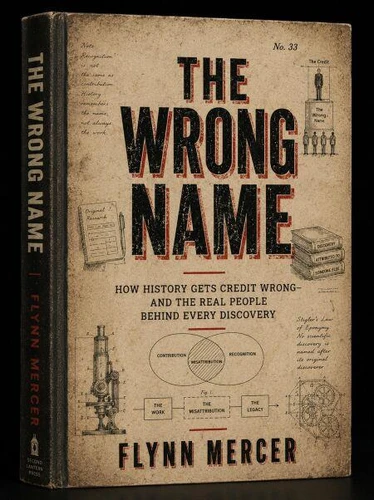
The last book I wrote was about evidence that took too long to be believed. Partway through it, working on a chapter about a nineteenth-century cholera outbreak, I ran into a smaller story that didn't fit the book I was writing at all. An Italian anatomist named Filippo Pacini had identified the actual bacterium behind the disease in 1854 - the same year as the outbreak in question - and published his findings.
Almost no one read them. Thirty years later, a German physician named Robert Koch found the same organism again, and the textbooks gave the discovery to him.
The last book I wrote was about evidence that took too long to be believed. Partway through it, working on a chapter about a nineteenth-century cholera outbreak, I ran into a smaller story that didn't fit the book I was writing at all. An Italian anatomist named Filippo Pacini had identified the actual bacterium behind the disease in 1854 - the same year as the outbreak in question - and published his findings.
Almost no one read them. Thirty years later, a German physician named Robert Koch found the same organism again, and the textbooks gave the discovery to him.

 , qui est-ce ?