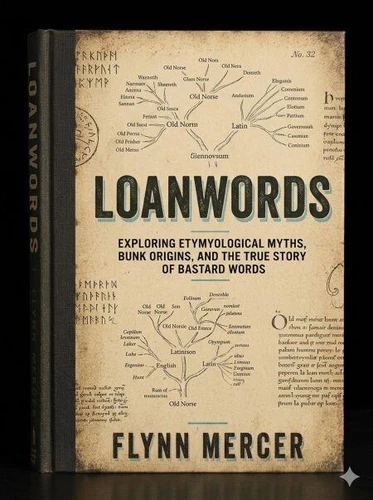
Every language is a compressed archive. Say "quarantine" and you're citing Venice's forty-day rule against plague ships. Say "boycott" and you're naming one Irish land agent, ostracized so completely in 1880 that his name became a verb within months. But some of the best-known word-origin stories are themselves myths. "Salary" really does come from the Latin word for salt - but no Roman soldier was ever literally paid in it.
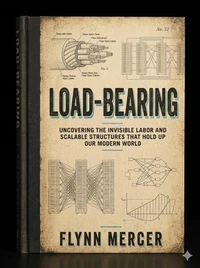
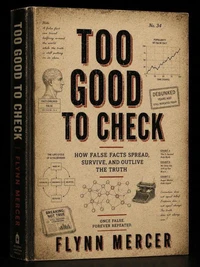
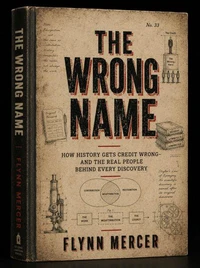
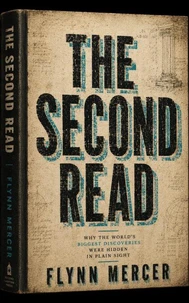
"Sabotage" really did come from French workers - but the popular story of thrown wooden shoes never happened. Loanwords traces the real history behind eight words, and is just as honest about the popular etymologies that turned out to be inventions along the way. Inside: The exact 1936 sentence that turned a vague motivational idea into a fake statistic, footnoted to a Harvard professor who never said it The word whose credited inventor publicly stated, in print, that his own brother actually coined it - and got ignored anyway A mapmaker's 1507 decision that named an entire continent, based on which explorer's letters happened to reach him first From Flynn Mercer, author of The Second Read, The Wrong Name, and Too Good to Check.
Every language is a compressed archive. Say "quarantine" and you're citing Venice's forty-day rule against plague ships. Say "boycott" and you're naming one Irish land agent, ostracized so completely in 1880 that his name became a verb within months. But some of the best-known word-origin stories are themselves myths. "Salary" really does come from the Latin word for salt - but no Roman soldier was ever literally paid in it.
"Sabotage" really did come from French workers - but the popular story of thrown wooden shoes never happened. Loanwords traces the real history behind eight words, and is just as honest about the popular etymologies that turned out to be inventions along the way. Inside: The exact 1936 sentence that turned a vague motivational idea into a fake statistic, footnoted to a Harvard professor who never said it The word whose credited inventor publicly stated, in print, that his own brother actually coined it - and got ignored anyway A mapmaker's 1507 decision that named an entire continent, based on which explorer's letters happened to reach him first From Flynn Mercer, author of The Second Read, The Wrong Name, and Too Good to Check.

 , qui est-ce ?